The PJ (poor joke) above might no longer remain a PJ if banana peel is replaced by a typical problematic situation one encounters in daily routine. The question remains unanswered then: Why do some people find it difficult to act beyond cure? They do think 'Prevention is The Best Cure' though! I was no different from them! But now my journey is gathering speed, hopefully in the direction that the blog is supposed to drive towards. Checkout my other blogs and work at http://www.worldOFkaizen.com/
Showing posts with label empowerment. Show all posts

Tuesday, 17 January 2017

Passion or Fashion?

7 P.M. Cool and pleasant evening. I was on an evening walk.

I was almost pulled by the rhythmic beats of Mridangam (a type of percussion instrument) from behind the hedge.

Raja (name changed) was practising, looking at the notations by his side. He could hardly read the notebook. He was sitting in dark at the farthest corner by the side of the eastern express highway in Thane.

For over five minutes Raja didn't even realise that I was standing by his side watching him play the Mridangam. My wife was watching patiently from a distance. She is used to such foolish halts of mine.

With a little bit of inquiry (finally when he looked at me), I came to know that he stayed in a rented shanty. His workplace was a few kilometers away. And that he sometimes came to practise in this corner whenever he got time. Once in a month he would go to his native near Murbad about 100 kilometres and take lessons from his Guru there.
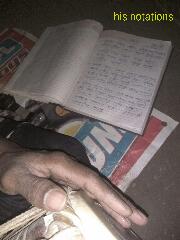
What a commitment towards one's passion!

Whereas it is very easy to get spoilt (with smoking, drinking and chewing tobacco) in a metro city like Thane or Mumbai, the boy chose a corner and Mridang. The young boy (at 20 age) was pursuing his passion by the noisy and polluted roadside after work hours.

The reason: 

His neighbors would complain to his landlord about the 'noise' of Mridang. 

No room inside his room that he shared with a couple of partners.

Many 'innovate' hurdles to complain of 'why and how a thing couldn't be done' even after the corresponding resources were available in abundance. The young boy instead found solutions over his hurdles while nurturing his passion, staying alone 100 kilometres away from his family.

What an empowerment and self-enablement!

Sure to grow into a real life RAJA (King) of his passion if he continues to nurture it with consistency (rather than Passion as a Fashion) and self-managed supervision like Ekalavya.

Actually while I was writing this blogpost, my wife showed me a WhatsApp ping. It wrote "Joshua Bell, playing incognito in the D.C. Metro Station, that was organized by the Washington Post as part of a social experiment about perception, taste and people's priorities.

This experiment raised several questions:

In a common-place environment, at an inappropriate hour, do we perceive beauty?

If so, do we stop to appreciate it? " particularly when it comes free!

May be the boy is still to go far as a percussionist.

But what I wanted to appreciate was that that's how big names get made. In fact most successful people in various fields have left similar trails in their individual lives. They had little more patience to turn tables over while their problems were hell bent on testing them.

Their passions won over their problems by miles!

Big names get made when people find opportunities in problems without complaining about lack of resources, if any.

Big names get made (with holistic satisfaction as the result) when people find and nurture their passions rather than running after the run-of-the-mill careers.

Who knows (like Joshua Bell) sometime in life the boy may become a great percussionist if not Padma Shri Zakir Hussain!

In his humble mind, perhaps he already is!!

Here's my Haiku poem over the learning of the day:

Passion isn't a Fashion
Success isn't a cushion
Life is being in Motion


Also read a few relevant blog-posts hereunder: Please do consider leaving a comment or consider sharing this post.

Do you know a Best-Career-Plan
Take your career in fast lane!
Talent-Is-Latent: Enable It
Is Your Job Boring!
Overworked? Tension? CPU of the mind hung-up
Do you exercise your choice meaningfully 
IQ-EQ-or-SQ: What-is-more-important
Eternally Happy
In-a-problem? No-problem! Dwell-a-while
I am afraid ! What do I do !! 
Fearful-Of-Death-of-Birth
Take Habits For A Ride 
Big-Be Or Bug-Be ! 
Are You Good If Others Are Bad?  
Want Need-Or-Want 
How To Make A Difference 
Success-or-failure! What-do-you-like?
Succession-Plans In Fast Lane! 
Do you exercise your choice meaningfully
Do You Ask Right Questions
Carrier for the Career 

Monday, 12 September 2016

"Break All the Rules" but with care!

I have some comments to offer on the six leadership lessons that Goler, the Facebook's HR chief, recommends from the book "First, Break All the Rules". I'm sure, the book is valuable though.

But before I begin, here's a MaiKu© (my Haiku) on it that I dare..

Rules broken without care

Cure is the nightmare

Crisis that all dare

The first lesson she talks about is "Personal relationships are crucial for success".

She talks about the 12-questions that the authors Buckingham and Coffer write to "capture everything you need to know about the workplace." Four of which she says are as follows that employees should respond positively to.

1. "Do I know what is expected of me at work?"
2. "Do I have the materials and equipment I need to do my work right?"
3. "At work, do I have the opportunity to do what I do best every day?"
4. "In the last seven days, have I received recognition or praise for doing good work?"

That's about empowering your employees. And I completely agree with it.

Lesson two she says, "Great managers do not follow the Golden Rule", which states that you must treat others as you would like to be treated, is one of the most common pitfalls of management, argue the authors.

This lesson is acceptable as long as the person has right intentions for the common good. Otherwise, a 'Kaans' who gets a 'Raama' treatment (i.e. gets forgiven for intentional mistakes, as per his own expectations) may get reinforced to continue his wrong acts if he is not awarded a 'Krishna' treatment at the right time in right proportion. Hardly anyone expects to be treated with punishment right?

Lesson three she says is "Employees should primarily be hired for talent". Good that the authors Buckingham and Coffman define talent as "a recurring pattern of thought, feeling, or behavior that can be productively applied.

I would always hire a person for talent as well her attitudes towards work and towards the people at workplace. In fact, I would value her attitude more than the talent and her knowledge itself. Because the latter can get diminished in absence of the former.

Lesson four she says, "Employees should be guided by outcomes, not steps". This does help to accommodate for individual approaches to work as also to unearth some innovative ones.

But if employees are given unguided freedom to find their own paths to achieve the agreed upon results, at times it may result into some damages in the form of prohibitively extra costs in terms of damages to customer, other stakeholders, or to the property itself due to abuse of certain procedures, norms on safety and change in specifications of the offerings.

Lesson five she says, "Buckingham and Coffman write that it seems intuitive that managers should spend more time with struggling employees than with top performers, but that their research shows the opposite is true, because top performers are responsible for the work that moves a company forward."

Struggling employees are as much important as the top performers, because else they may get demotivated if they feel ignored.

An abnormality, while in its seed stage, ignored by 'ignored people' may grow into a big problem that even the top performers may not be able to solve.

Remember, generally top performers are fewer than the number of struggling employees in an organisation. The time may not be enough for the top performers to catch up with the growing number of grown problems ignored by the struggling employees inadvertently though.

Lesson six, she says, (Buckingham and Coffman recommend that in order) to have a thriving organization, a company must offer several developmental paths, creating "heroes" in each primary function, so that an employee is actually rewarded with more freedom to excel.

I do appreciate this one provided the "heroes" are created and recognized from among the struggling employees as well, in fact from all around the company. The freedom to them should of course be guided and with a protection from fear of failure, if any. The resultant will be a lot of improvements (Kaizen innovations) across the company even from the so called struggling employees... A win-win for the struggling employees as well as for the top performers and ultimately a win-win for the company.

Also read a few relevant blogposts hereunder: Please do consider leaving a comment or sharing this post.
Make It Simpler, Rest Will Follow 
How To Make A Difference 
Big-Be Or Bug-Be ! 
Treat Root-causes, Not Symptoms ! 
Nauseous Communication Gaps 
Do You Cleanup-After-Crisis 
Raam or Krishna-Shyam: Tell me Hey Raam! 
Will It Work Here?  
Some Moron ! Some Great !!! 
That's How Morons Work 
You seem Reasonable if you appear Un-reasonable 
Smart-Moron Who Breaks Your Glass  
WOW Work-Culture: By Telling or Selling 
Suggestions On-Sale, None-To-Buy 
Can-changing-thoughts-change-a-nation
Ridiculous Poison-culture versus Maverick Kaizen-culture 
Tolerate Once, Twice, Thrice? 
That's how some business partnerships work 
Taken-For-Granted ? You Deserve It !! 
Technology in-place, security dis-placed
IQ-EQ-or-SQ: What-is-more-important?
Do you know a Best-Career-Plan 
Customer or Custo-Mer?  
Experienced A Delightful Payment ! 
An Experience of Heart-and-Soul 
Less With More And More Gets Sore 
Should one care for value?  
ABCD of India Shining
Beware Of Political-Presentations 
Do You Cleanup-After-Crisis 
Hoarders Of Filthy Hoardings
Taken-For-Granted ? You Deserve It !!
In a Problem?: No Problem ! Dwell A While !! 

Sunday, 9 March 2014

Strategise To Achieve Targets Daily

Lot of time and efforts get spent on strategy planning. 

Strategy sessions usually get organised away from workplace (Gemba). They often get glorified with team events, water sports, outdoor games around campfire, treasure hunts and so on. They give stylish titles to it. "Off-site", some say proudly after attending it.

Thinking that the 'so-motivated' lot might willingly accept appraisals, they try to manage by objectives (MBO). HRD managers (read 'people' managers) incorporate numbers into periodic (most often 'annual') performance appraisal systems. Some slogans complimentary to the initiative get hung on wall.

Only after failing miserably they realize that execution of strategy is much more than quarter-on-quarter (qoq) or year-on-year (yoy) appraisals or reviews. It goes beyond dusting the displayed-slogans periodically.

It's about eating-drinking-breathing the strategy announcements and talks in terms of actions. It's not merely about dreaming the distant vision. It's about living the dreams daily. 

Going beyond the "bird's-eye view" it's also about "worm's-eye view" at grass-root level (as Mohamaad Yunus creator of the Grameen Bank says about microfinance).

It's about management-OF-strategy, management-OF-objectives (MOO) or rather strategy deployment (Hoshin-Kanri) process. 

If MBO is equivalent to throwing (goal) balls over blind-walls among layers (hierarchies) and functions then MOO is equivalent to coaching to manufacture the balls (i. e. evolve goals) as also helping to catch them daily at tactical levels. 

MOO is like giving as much importance to single runs as much, say, a cricket match gives to a 'Six' on the first ball of the first over. It's about daily (Nichijo) management (Kanri) of strategy or of the policy (Hoshin-Kanri) with a sense of urgency. 

It's about recognizing heroes for their improvement efforts to overcome daily hurdles while playing for mini-goals as a subset of the strategic goals. It's about the culture of looking for as well as creating such heroes daily across the customer-supplier chain. 

Post such recognition, studying¹ of 'what went right' or 'what went wrong' as the case may be rather than mere review of the 'runs' taken for goal-making process itself is a daily affair. It's an on-going 'study' and enablement by corresponding on-going adjustments to the allocation of resources as per dynamic needs of business environment rather than doing it as 'qoq' or 'yoy' performance reviews. 

If formulating strategy is important then formulating strategy-to-execute it is more important characteristic of the MOO approach. 

Like winning a match; sales, other numbers, growth goals, etc. then get achieved as a bye-product resultant of leading and managing the above process intelligently!

¹ Called as hansei: a critical step in any process: the “check” phase of the famous “Plan-Do-Check-Act” cycle that Japanese business people use to govern any activity.

Also read a few relevant blog-posts hereunder

Suggestions On-Sale, None-To-Buy
Comprehensive-Strategic-Audits
Will It Work Here?
Can-changing-thoughts-change-nation?
In-big-problem-wear-hats-to-solve-it
Ridiculous Poison-culture versus Maverick Kaizen-culture
WOW Work-Culture: By Telling or Selling
IQ-EQ-or-SQ: What-is-more-important
Talent-Is-Latent: Enable It!
Judge If It's Paralysis-By-Analysis
Will It Work Here?
Suggestions On-Sale, None-To-Buy
Does recognition really matter
Who Comes First: Consumer Or Customer ?
Treat Root-causes, Not Symptoms !
ABCD of India Shining
Do You Ask Right Questions?
Am I 'Short-sighted' or 'Long-sighted'?

Wednesday, 20 November 2013

Winning 2-Minutes To Customer

Just read in Loksatta about one Mr Chitale receiving compensation of Rupees 7250 directly transferred to his bank account y British Airways for wheel of his bag getting damaged in handling. Airlines' response was smooth and speedy he said. Airlines had tried to repair the bag through their supply-chain partner but in vain.

In 1997, I was in NewYork on a group-study-exchange mission organised by Rotary International. While traveling from NewYork to Orlando, inadvertently my bag reached to Chicago. I complained to the airlines office at the airport. They promptly sanctioned 100 Dollars to me against the bills for essentials like overnight clothes, toothpaste, etc. Being around Disneyland I was happy to buy a couple Mickey-Mouse brand clothes at the airport.

Next day morning I got a 'good-morning' call from reception desk saying my bag was already in the hotel lobby safe and sound. Not much trouble for me although the airlines did have an opportunity to eliminate the error in baggage handling.

In a stark contrast to such delightful experiences, in 1981 I had to run from pillar to post knocking doors and windows in vain for a broken bag and its damaged contents due to erroneous handling by Air-India. Since then I avoid flying on it: a customer-quit as they say.

I remember that painful experience even after decades.

What is the learning?

There might be some chance of a person forgetting a good experience but hardly any chance of a customer forgetting bad experience from a supplier.

In case of one airline it was about 'sensitivity' to customer complaint while dealing it with a 'sense-of-urgency'. In case of other airline it was about 'indifference' to customer.

Now a days the sensitivity has acquired some strategy and structure to respond to customer complaints as a part of excellence-journey of companies. 

A Structure To Respond To Customer

I had introduced a 2-2-2-2©structure in terms of a model to respond to any stakeholder in general and to customer in particular. It was first introduced in a Cummins group company: Fleetguard Filters Limited Pune.

It was later on institutionalised in Cummins group worldwide.

In the context of a customer complaint, the 2-2-2-2© model might mean 2-Minutes, 2-Hours, 2-Days, 2-Weeks time-bound response to  customer for a given level of performance strived for. The response is supposed to eliminate root cause/s of the abnormality within 2-Weeks rather than stopping at first-aid treatment that anyway must be given within 2-Minutes. A powerful review mechanism driven by CEO (with an escalation matrix that an aggrieved customer can access in case of non-compliance) is an integral part of the structured process in order to ensure the timeline and quality of it's compliance. 

In the context of various other business situations, the timeline may be different and must evolve. For instance for an emergency/crisis having high impact, it could mean 2-Seconds, 2-Minutes, 2-Hours, 2-Days.

There is an empowerment mechanism built into the structure. Timeline-based visible dimensions as above are the generic ones. Company specific visible dimensions may be some sanction limits such as 100 Dollars compensation or a freedom to handover gift for the hassles or the efforts taken by the customer to complain and so on.

More important are the invisible dimensions that result into the culture reflected in terms of the spirit, the body-language, the humbleness, the humility such as that I had experienced while the airline employees responded to the complaint in making it hassle-free and speedy. 

There is tremendous scope and choice for innovations in both in order to delight customer with differentiation. The invisible ones in particular are difficult to emulate. That's where lies the competitive advantage.

If such a structure is implemented effectively, the customer becomes supplier's advocate and it's rewarding in long run as well as in terms of short term sales and numbers. Such an advocate is much more effective than even a highly paid marketing manager.

A prospective customer is likely to believe and act more often if recommendation comes from the horse's mouth: The Word-Of-Mouth!

Friday, 15 November 2013

Fearful Death-Of-Birth !

Imagine anxiety and fear of a typical interviewee:

Sir, what's my profile and what will be my pay?

I am employing you 'To Borrow My Worries' and your annual-pay will be 'A Lakh of Dollars' dear: replies the businessman.
The Interviewee: But how can a small business afford such a pay package?
The Businessman: That's your first worry!

Imagine anxiety of a typical mother of a patient when Doctor asks:

Which news would you like to hear first, I have a bad news and a very-bad news for you? 
Patient asks for bad news first.
Doctor says: Your lab-test results show you have 24 hours to live.
Patient: Only 24 Hours! Oh My God!! Can there be any worse news than this?
Doctor: The very-bad news is I've been trying to reach you since yesterday.

Jokes apart. 
Fear has power to pull one down from all the previous achieved happiness and achieved goals in one shot.

At spiritual level as Saint Gondavlekar Guruji says, anxiety and worry is like termites. One can't see it eat anything.

Termites are evident only in the form of a destroyed book or cloth. Similarly, effect of anxiety and fear can be seen only in the form of destroyed faith and confidence in one's own self and thereby in terms of an undeserved outcome or a failure.

In fact if studied scientifically as well as spiritually, in longer run
- the so-called failure as also success turns out to be relative, and then,
- one accepts 'whatever happens, happens for good' at the end of putting in best efforts.

In longer run many 'windows-&-doors' of opportunities do open unless one succumbs to termites of anxiety and fear in the interim.

Hence not allowing fear to be in the vicinity should be one of the most important goals, in fact should be a top order of goal of everyone.

And so far, that was about managing fear for material goals.

Ultimate, the choicest of all goals, is to manage mother-of-all-the-fears: The Fear-of-Death.

It's about empowering one's own 'self'.

It's about training one's own 'self' on domain knowledge of a beautiful spiritual thought reflected in various versions of a poem that I came across sometime somewhere:

Looking at the horizon, someone by the side of the sea exclaims, "Oh, the Ship is gone !" just while on the other side of the horizon someone rejoices, "Wow, the Ship has arrived !"


That's where it's the 'Death of the concept of birth' and vice versa.

That inspires me to give a little poetic touch-n-tip:

Life-Boat for Fear-of-Death !

Why do you cry "Oh, S/he is gone !"
Let someone rejoice, "Wow, S/he is born !"
On the day this thought is borne !
Fear is gone with a gift of New Dawn !!


Wednesday, 12 June 2013

I am afraid ! What do I do !!

I am afraid ! What do I do ?: Flex Muscles !!

In spite of being among top-10 percentile, he wasn't able to get through top companies in campus placement. He was preparing for third round of interviews.

Gripped by fear he was anxious about whether he will get through.

As a first-aid mechanism to tackle the situation, I reminded him to be coffee-bean like by gaining strength from his own achievements against difficult conditions in past. A coffee-bean adopts to tough conditions of boiling-water by getting assimilated in it along-with it's own color and taste, unlike a carrot in it that gives-in it's toughness.

It's like arousing self-confidence by meditating on actionable-facts from one's own successful encounters or that of a role model instead of day-dreaming on imaginary fears. Although sounding like 'flexing muscles' deceptively to scare a dog away, it's useful.

Like in an eu-stress kind of situation that pumps in adrenaline to create positive pressure for productivity, one does gain energy by a couple of de...ee...ep breaths followed by 'flexing' and imagining positive outcome.
It's important however to be prepared to accept failures, if any, gracefully.

Finally he did get through, more because of his own commitment to 'flex-n-fight' rather than 'flight' away.

In hindsight, the latter job did turn out to be better in terms of both the profile and the package than the first two that gave him a miss.

What do we fear about?

As per REBT research, one tends to expect for herself the following. 

1/ A positive outcome in each situation
2/ Good treatment from everyone, 
3/ Fairness and ease in life

And then s/he begins fearing imaginary 'gap's vis-a-vis expectations as above.  S/he fears accepting reality and facts as challenges

For instance, had the so-called failure allowed anxiety and fear to take berth in place of faith and confidence, the interviewee might have missed berth in the latter job as well.

I remember a song in Marathi language 'Athshey-khidkya-navshey-daarey' meaning '800-windows-900-doors'. Life offers many opportunities except for those who choose to see and fear dead-walls in place of 'windows-&-doors'.

A caution: First-aid kind of flash-in-pan mental games such as above can't substitute being prepared for a given situation.

In 1980s, I had used a practical mechanism to be prepared to tackle fear of interviews. On most holidays during my first job I used to appear for various interviews. I was conscious to not be arrogant nor over-confident of course although I didn't need a corresponding job. 

In fact, I was confident since I had nothing to lose. It was like experiencing 'windows-&-doors' before even needing those.

Preparedness in general is like having a passport in terms of
- trained-mind in place to stay positive even in an unfavorable outcome,
- intrinsic knowledge of a given situation.
- alternative plans as well as risk management plans as a part of corrective mechanism

Preparedness helps steadfastly moving ahead with calculated risks of adverse consequences, if any.Thereby it helps mitigate fear  Being prepared to what all might happen in the 'interim' and as an 'end' while sailing makes one take steps consciously and confidently. It enhances chances of success. In fact, thereby it breeds enhanced-confidence in each subsequent situation.

It's prudent to take inner-view in light of the above before and while tackling a tough situation be it an interview or otherwise.


What's the learning? 

There is a structure in the above process.

In fear there is a negative structure that one climbs down a dark valley. 

In 'being prepared' there is a positive structure. One gets luxury of time that brings in patience. With patience comes poise that helps one climb up a mountain towards Sunrise. 

Which structure to use is about exercising choice.

So relax and train mind on these powerful thoughts.

Be prepared.

Gain positive energy by a couple of de...ee...ep breaths followed by 'flexing' and imagining positive outcome.

And then fight the situation out.


Tuesday, 11 June 2013

Ridiculous Poison-culture versus Maverick Kaizen-culture

"What happened? Why are you so nervous?", I asked one of my singer friends during our monthly singing meeting. "We have a lovely theme of singing 'monsoon songs' with a lively setting of heavy rains in the background!"

My friend is usually well-prepared for our singing meet up every third Sunday. We all professionals from various fields with a common interest enjoy theme-based singing.

"Are you not prepared today?", I continued.

"That's not the case", he murmured. "I am worried about my business dear. It has become a noise while I am on a song".

He owned a mid-sized business. In spite of reasonable compensation he had a problem of attrition affecting business performance year-on-year. It was their innovative product that had been somehow helping them sail through. In fact, their 'somehow'-management techniques consisted of 'pushing' people (including a major chunk of attrition-substitute freshers) for production, 'shouting' at them for mistakes, etc. This had been resulting in a 'snow-ball effect' of managing rejections, delayed deliveries, and so on.

In effect, sagging morale of people had been posing a perpetual challenge of keeping both the old brigade as also the new breed engaged homogeneously. Anxiety of future, that was evident on his face, seemed to take toll on him. Actually he had been voicing this concern at regular intervals in past.

What was the solution to engage people? 

There was no point in him worrying about attrition in particular. Even big and successful companies could't prevent that. Finding ways and means to get both the old and new engaged speedily and sustainably was the only answer. More the engagement, lower the performance issues, easier and faster the familiarization to processes, higher the affinity to workplace, lower the possibility of attrition.

Getting that done was a challenge particularly on a fear-struck workplace that on the other hand was full of challenges on quality, cost and delivery front.

In a fear-struck workplace if leader himself behaves like a maniac, it adds fuel to the fire. "What if I change the process" kind of 'What-if' questions haunt people under-fear especially if they are freshers.

Fear of unknown haunts just as a child gets scared of entering a dark room.

What will boss say if I make mistakes?
Will I be able to do this neatly or adequately?
Will I be able to complete it (Compliance)?
Will I fail?
Will I be able to communicate my stand?
Will my colleagues ridicule me?
Will they criticize me?

Such aesthetic fears promote staying put in status-quo.

While on one hand people under the grip of fear wish that everything should go right, on the other hand they imagine everything undesired happening. They begin worrying and get excessively anxious. This results into several mental, emotional and physical symptoms including demotivation, loss of self-esteem and self-confidence, etc. In other words generalised anxiety disorder (GAD) takes their charge resulting into negative 'snow-ball effect' around. 

Apart from demotivating work-environment, causes of such worrisome behavior could be a mix of biological, psychological, social and cultural ones that may include: lack of preparedness for the occasion, personality inhibitions, shyness or learned behaviour of habitually worrying or anxiety (as a trait) inherited from their family environment, etc.

In personal setting the affected people may get conventional advice that of resorting to self-help strategies such as to "have self-confidence even if others don't have it in you" or to "look at your own self positively and get set & act" or to "relax, deep-breathe and meditate" while in mess, and "to "approach solving a problem one-step at a time", etc.

Yes, it's always good to make your own-self robust than trying to change outside world to accommodate your weaknesses. But only one's own family members with their captive homogeneity and serious interest may afford to spend that kind of time and efforts on helping one individually.

But in a typical dead-line based corporate setting that employs 100s and 1000s of people with multiple diversities at personal and professional level, spending that kind of time and efforts on helping everyone individually may become prohibitively expensive and difficult in spite of employing a fleet HRD managers and their initiatives. 

So what is the alternative solution for businesses such as that of my friend?

How to instill self-confidence in each and every member of the corporate family? How to align them with speed matching that required to perform and deliver time-bound goals of the organisation?

One pioneered by Toyota among various methods was about creating various listening platforms in order to preserve "respect for people" and to preserve their "individuality" in terms of individual creativity as well as speed of participation without affecting speedy demands on the organisation.

Toyota did this by providing

1/ empowered environment to make changes in work under an individual's direct control,

2/ structured platforms to declare and get recognised for the efforts put in suffering or making those changes with rules that would pre-empt all the fears including that of failed changes, if any.

This is where structured problem solving methods such as Gemba-Kaizen, One-step instant Kaizens, Seven-step Kaizens, Quality-Circles, Kaizen-Teian, etc. were born that helped them mint millions and billions of improvements. Most important common thread among them all was listening to the changes made by people with employee empowerment rules such as following as the essence among other support structures for creating Kaizen-culture as they say in one-word at Toyota. 

1/ The Kaizenee (an employee willing to make an improvement) is the boss to decide, make and declare small-changes within a pre-decided area with pre-decided conditions viz. 'go-zone' that won't disturb safety standards and customers. He is given full help by a Kaizen Engineering Team (KET) to experiment changes. (P. S. There are methods elsewhere in my blogs that help 'pull' all employees into willingness to do Kaizens).

2/ Mistakes and failures, if any, are pardoned. However they should be recorded as opportunities for improvement.

3/ There is no question of quantum of adequacy and compliance and that of size of savings as long as the deviations are recorded so that they don't go unnoticed and undergo next improvement (PDCA) cycle followed by standardization (SDCA) cycle.

4/ The Kaizenee's style and method of communication is considered least important as long as efforts in making changes are demonstrated personally or evidenced with before-after pictures. Anyone found ridiculing or criticizing a Kaizenee or her style and her sincere efforts is dealt with strictly.

5/ Moment an abnormality is noticed, anyone can stop the entire running line at a touch of a switch of an Andon that blinks or hoots placed at strategic locations.

6/ All help and attention is provided to a Kaizenee by a designated team if s/he brings forward any abnormalities in compliance to above rules. 

With such empowering rules, where is the question of fear now. Isn't this kind of empowerment enough to 'manufacture' self-esteem, confidence, teamwork in order to make the workplace self-managed.

It was difficult for my friend to believe this kind of maverick approach. In fact, his reaction was "with such rules 'they' will force 'us' to close down the shutters". Short of efforts to act he was stuck in his own set of paradigms. 

He may finally end up believing the maverick Kaizen-way on visiting some case-studies though. But I have serious doubts whether he will create one of his own because it's about 'believing-by-doing' which is very difficult for people who believe in 'talking-than-doing'.

Also read a few relevant blogposts hereunder: 

Make It Simpler, Rest Will Follow 
How To Make A Difference 
Big-Be Or Bug-Be ! 
Treat Root-causes, Not Symptoms ! 
Nauseous Communication Gaps 
Do You Cleanup-After-Crisis 
Raam or Krishna-Shyam: Tell me Hey Raam! 
Will It Work Here?  
Some Moron ! Some Great !!! 
That's How Morons Work 
You seem Reasonable if you appear Un-reasonable 
Smart-Moron Who Breaks Your Glass  
WOW Work-Culture: By Telling or Selling 
Suggestions On-Sale, None-To-Buy 
Can-changing-thoughts-change-a-nation
Ridiculous Poison-culture versus Maverick Kaizen-culture 
Tolerate Once, Twice, Thrice? 
That's how some business partnerships work 
Taken-For-Granted ? You Deserve It !! 
Technology in-place, security dis-placed
IQ-EQ-or-SQ: What-is-more-important?
Do you know a Best-Career-Plan 
Customer or Custo-Mer?  
Experienced A Delightful Payment ! 
An Experience of Heart-and-Soul 
Less With More And More Gets Sore 
Should one care for value?  
ABCD of India Shining
Beware Of Political-Presentations 
Do You Cleanup-After-Crisis 
Hoarders Of Filthy Hoardings