The PJ (poor joke) above might no longer remain a PJ if banana peel is replaced by a typical problematic situation one encounters in daily routine. The question remains unanswered then: Why do some people find it difficult to act beyond cure? They do think 'Prevention is The Best Cure' though! I was no different from them! But now my journey is gathering speed, hopefully in the direction that the blog is supposed to drive towards. Checkout my other blogs and work at http://www.worldOFkaizen.com/
Showing posts with label Failure. Show all posts

Wednesday, 22 July 2020

Cost-of-Quality: COQ is a relative term!

Components of the Cost-of-Quality in Kaizen parlance are as follows.

1/ Costs of external-failures incurred due to failures at customer's end.
2/ Costs of internal-failures incurred in order to handle failures at supplier's end.
3/ Costs of appraisal incurred in order to inspect/audit the adequacy and compliance of quality and quantity of work, and the workmanship as well, as per standards/procedures.
4/ Costs of prevention incurred in order to undertake improvement or failure-prevention activities (as preventative/proactive measures) & corresponding education/training for the same.

First two components are the 'cost-of-poor-quality' (CoPQ) that are incurred after failures. 

Last two components are the 'cost-of-good-quality' (CoGQ) or you can say 'investment' required to prevent a failures in the first place.

The components, rather it's terminology, is relative and hence the  term Cost-of-Quality itself is relative! Use of the components may depend upon the context of the situation.

Is the statement: "If the customer needs to administer incoming inspection on his inputs received from the supplier then that's typically the 'cost of appraisal'!", made by a participant in one of my sessions, 'true' or 'false', for instance?

The statement is 'false'!

It's actually the 'cost of prevention' for the customer. Because she wants to prevent defective inputs from going into the next process. Engaging into inspection activities on the customer's own processes or processing activities, although it's a NVA (non-value-activity or waste) however, is the 'cost of appraisal' for the customer in order to prevent the 'cost of internal failure' in the customer's processes.

Whereas the incoming inspection on his inputs may be is the 'cost of external failure' for the supplier. This is particularly so if the customer engages into 'inspection', a NVA (non-value-activity) 'forced' on to her by herself, because of lack of trust (past dissatisfaction) in the supplier's quality and hence in the supplier's brand image.

Also read a few relevant blogposts hereunder:

Do You Force Customers To Quit
In-a-problem ? No-problem! Dwell-a-while!
Customer or Custo-Mer ?  
Experienced A Delightful Payment ! 
An Experience of Heart-and-Soul 
Do you keep curing your brand ?  
customer gets what s/he deserves: Shoddy Quality!  
Listen to iceberg of VOC to acquire customers 
Less With More And More Gets Sore 
Should one care for value ?  
Can-changing-thoughts-change-a-nation
Ridiculous Poison-culture versus Maverick Kaizen-culture 
Tolerate Once, Twice, Thrice?  
The Business Of Businesses 
That's how some business partnerships work 
Taken-For-Granted ? You Deserve It !! 
Strategise To Achieve Targets Daily 
Does recognition really matter 
That's How Morons Work
Simplicity Of Theory Of Relativity

Friday, 17 July 2020

Appraisal or Prevention! What's better?

In-process inspection inside a company is typically a 'cost of appraisal' for the company. 

Is the same true for a supplier, for her 'visit to customer for in-process inspection while installing the supplies' at customer's end as a part of the supplier's process!?

It's True, the said installation being a part of the process of the supplier company. 

It's, however, a 'cost of external failure' for the supplier if installation is customer's responsibility and she finds a defect/error in supplies while doing so. Otherwise, it's the 'cost of prevention' for the customer. 

In either of the cases, be it appraisal or prevention, it is a COGQ (cost of good quality) anyway as a part of the COQ (cost of quality)!

One may have to strike a balance though, while deciding upon spending on the latter, meaning on the visit to customer as a part of the process itself, especially in case of high-impact high-value industrial products. 

In any case, the COGQ in general and the other 'costs of prevention' in-house, in particular, may prove to be most beneficial and highly profitable at that.

Why not try validating this statement by calculating the components of Cost of  Quality, for a failed item that reached your customers in past!

Calculating the Cost of Quality (both the COPQ & COGQ), classifying the corresponding components as Tangible (Visible) Costs & Hidden Costs, and comparing them might help.


Also read a few relevant blogposts hereunder:

Do You Force Customers To Quit
In-a-problem ? No-problem! Dwell-a-while!
Customer or Custo-Mer ?  
Experienced A Delightful Payment ! 
An Experience of Heart-and-Soul 
Do you keep curing your brand ?  
customer gets what s/he deserves: Shoddy Quality!  
Listen to iceberg of VOC to acquire customers 
Less With More And More Gets Sore 
Should one care for value ?  
Can-changing-thoughts-change-a-nation
Ridiculous Poison-culture versus Maverick Kaizen-culture 
Tolerate Once, Twice, Thrice?  
The Business Of Businesses 
That's how some business partnerships work 
Taken-For-Granted ? You Deserve It !! 
Strategise To Achieve Targets Daily 
Does recognition really matter 
That's How Morons Work
Simplicity Of Theory Of Relativity

Wednesday, 12 September 2018

Sponge! Shield!! or a Sword! !!

Are you a Sponge, a Shield or a Sword!

This was what I asked the audience when I was checking their homework.

During our assignments, we do PDCA (Plan-Do-Check-Act) on the MOM (minutes of meeting) agreed upon with the target company.

It's but natural for anyone to get embarrassed if s/he gets a feeling of being 'checked'.

But coaching does warrant finding out if the things are going on as planned (studying rather than 'checking'). That's why PDCA cycle is sometimes called PDSA (Plan-Do-Study-Act) cycle!

Course correction during the study cycle is the natural sequel.

How do people respond then!

Some try to defend why they couldn't do what they were supposed to do.

Some come out with swords to argue out how that what was agreed to itself was wrong.

Some others confess if they did not do it, while few of them ask for help having tried but 'failed'.

The last category is the real learners!

I call such a learner as a sponge. When someone comes with an attitude of absorbing new learning (a sponge), s/he ends up getting more of it (more of the better).

In the learning field, both the former categories, the shields that defend, and the swords that come out, are ultimately the losers. Because they think they are the best!

The sponges think that there are better ways than what they tried. There's no the best in their dictionary. Only better!

Because better is always better than the best!!

Former is a moving target heading towards excellence!

Because of complacency the latter may end up being stagnant!!

So it's upto us to be a Sponge, a Shield or a Sword!

Being Sponge is a More-Win-and-Less-Lose!

Also read a few relevant blogposts hereunder: Please do consider leaving a value-adding comment or consider sharing this post.

Being Perfect

Waste-to-eat Sea-to-drink

That's How Morons Work

Can-changing-thoughts-change-a-nation

Ridiculous Poison-culture versus Maverick Kaizen-culture

How To Make A Difference

Old-Problems, New-Reasons !

Taken-For-Granted ? You Deserve It !!

Performance ... Strategise To Achieve Targets Daily

Kaizen, even in air!

Prevention: The Best Cure! ... Is it really so?

Old-Problems, New-Reasons !

In a Problem?: No Problem ! Dwell A While !!

In-big-problem? Wear-hats-to-solve-it!

Success-or-failure! What-do-you-like?

Overworked? Tension? CPU of the mind hung-up?

Monday, 23 October 2017

Waste generates waste!

Ting tong!

Security guard on the door: "The sweeper hasn't come today. Take your garbage cans inside."

Ok.

Ting tong! again after an hour.

This time the security guard comes with a casual (temporary) sweeper. I fetched the garbage cans to get them emptied.

(After a while) Ting tong! again the third time.

I rush out from the wash room.
This time the regular sweeper arrives and goes back empty handed.

I call back the security guard to check what's happening.
Why the bell is rung so many times in the morning rush hours?

The guard responds there was a communication gap.
The regular sweeper reported late on duty.

Can you see how the waste gets generated vis-a-vis the normal routine that should have happened in a flow without interruptions to anyone! You may compute the waste by measuring the impact of each activity that had to be performed extra (non value activity NVA that doesn't add value to the basic need) over and above the desired one.

The desired was also that the regular sweeper should've informed about autonomous change in his schedule.

Now you know why thefts happen in absence of the guard who's supposed to be on his regular duty rather than engaging himself in a NVA prompted by NVA of someone else. The theft and related activities also are a waste!

The sweeper changing his own schedule without prior intimation is not observing a SOP. You getting delayed to work with corresponding tension due to extra activities (NVA) such as opening the door three times is a waste too!

Well such things can happen!

But important is - not to repeat them by making relevant improvements (or Kaizens as they say) and - even to prevent such problems in similar situations at other places.

Can you think of some to suit your own circumstances so that not the guard, nor you get interrupted even if the sweeper doesn't report on duty for one day!

Can you also spot some waste to do Kaizens upon in your daily work (Nichijo-Kanri) that you inadvertently or unknowingly consider (rather take for granted) as a routine!

Also read a few relevant blogposts hereunder: Please do consider leaving a value-adding comment or consider sharing this post.

Waste-to-eat Sea-to-drink

That's How Morons Work

Can-changing-thoughts-change-a-nation

Ridiculous Poison-culture versus Maverick Kaizen-culture

How To Make A Difference

Old-Problems, New-Reasons !

Taken-For-Granted ? You Deserve It !!

Performance ... Strategise To Achieve Targets Daily

Kaizen, even in air

Prevention: The Best Cure! ... Is it really so?

Old-Problems, New-Reasons !

In a Problem?: No Problem ! Dwell A While !!

In-big-problem? Wear-hats-to-solve-it!

Success-or-failure! What-do-you-like?

Overworked? Tension? CPU of the mind hung-up?

Wednesday, 1 February 2017

Water Matter

Study the two videos attached!

What do they suggest?

One of the videos shows the amount of water that goes down the drain (rather gets wasted) in a single flush stroke.

The other one shows the wastage of water is reduced considerably.

The latter was a case of handling the lever consciously to release it early enough so that only needed amount of water is used.
Sometimes it's a case of wrong setting or lack of maintenance, both resulting in the lever getting stuck. See picture-1.

In any case, human is to err!
The error however results into defective output and hence it produces waste.

But then what can one do?

See picture-2. This one is a mistake-proof (called as Poka-Yoke Kaizen in Japanese industry!) design of the flush tank.

It has two levers side by side: one for economy flushing and the other for normal flushing. The user needs to choose the right one consciously of course! Another opportunity for Poka-Yoke that is!

It's good to eliminate defects and waste early enough at initial or design stage itself. That's why this pillar of TPM (total productive maintenance) is also called as 'early equipment management' or 'initial flow control' (IFC).

It's the job of everybody to think, workout and feed their ideas about probable failure modes (FMEA, failure mode and effect analysis) so that corresponding Kaizen solutions can be incorporated at design stage itself.

The objective is to make the offering easier, faster, and less costly to make it and service it as well. In fact the design should, as far as possible, be maintenance free during the life-cycle of the offering; the concept called life-cycle-cost.

Can the change advance from thoughts stage to action now?


Read a few relevant blogposts hereunder:

Change is a hearty game!
Rise-n-Fall in the Rain-Fall 
Take Habits For A Ride 
Can-changing-thoughts-change-a-nation
Do you exercise your choice meaningfully
Not-Soon, Says Monsoon
Rise-n-Fall in the Rain-Fall   

Tuesday, 17 January 2017

Passion or Fashion?

7 P.M. Cool and pleasant evening. I was on an evening walk.

I was almost pulled by the rhythmic beats of Mridangam (a type of percussion instrument) from behind the hedge.

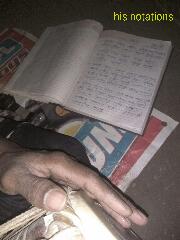
Raja (name changed) was practising, looking at the notations by his side. He could hardly read the notebook. He was sitting in dark at the farthest corner by the side of the eastern express highway in Thane.

For over five minutes Raja didn't even realise that I was standing by his side watching him play the Mridangam. My wife was watching patiently from a distance. She is used to such foolish halts of mine.

With a little bit of inquiry (finally when he looked at me), I came to know that he stayed in a rented shanty. His workplace was a few kilometers away. And that he sometimes came to practise in this corner whenever he got time. Once in a month he would go to his native near Murbad about 100 kilometres and take lessons from his Guru there.

What a commitment towards one's passion!

Whereas it is very easy to get spoilt (with smoking, drinking and chewing tobacco) in a metro city like Thane or Mumbai, the boy chose a corner and Mridang. The young boy (at 20 age) was pursuing his passion by the noisy and polluted roadside after work hours.

The reason: 

His neighbors would complain to his landlord about the 'noise' of Mridang. 

No room inside his room that he shared with a couple of partners.

Many 'innovate' hurdles to complain of 'why and how a thing couldn't be done' even after the corresponding resources were available in abundance. The young boy instead found solutions over his hurdles while nurturing his passion, staying alone 100 kilometres away from his family.

What an empowerment and self-enablement!

Sure to grow into a real life RAJA (King) of his passion if he continues to nurture it with consistency (rather than Passion as a Fashion) and self-managed supervision like Ekalavya.

Actually while I was writing this blogpost, my wife showed me a WhatsApp ping. It wrote "Joshua Bell, playing incognito in the D.C. Metro Station, that was organized by the Washington Post as part of a social experiment about perception, taste and people's priorities.

This experiment raised several questions:

In a common-place environment, at an inappropriate hour, do we perceive beauty?

If so, do we stop to appreciate it? " particularly when it comes free!

May be the boy is still to go far as a percussionist.

But what I wanted to appreciate was that that's how big names get made. In fact most successful people in various fields have left similar trails in their individual lives. They had little more patience to turn tables over while their problems were hell bent on testing them.

Their passions won over their problems by miles!

Big names get made when people find opportunities in problems without complaining about lack of resources, if any.

Big names get made (with holistic satisfaction as the result) when people find and nurture their passions rather than running after the run-of-the-mill careers.

Who knows (like Joshua Bell) sometime in life the boy may become a great percussionist if not Padma Shri Zakir Hussain!

In his humble mind, perhaps he already is!!

Here's my Haiku poem over the learning of the day:

Passion isn't a Fashion
Success isn't a cushion
Life is being in Motion


Also read a few relevant blog-posts hereunder: Please do consider leaving a comment or consider sharing this post.

Do you know a Best-Career-Plan
Take your career in fast lane!
Talent-Is-Latent: Enable It
Is Your Job Boring!
Overworked? Tension? CPU of the mind hung-up
Do you exercise your choice meaningfully 
IQ-EQ-or-SQ: What-is-more-important
Eternally Happy
In-a-problem? No-problem! Dwell-a-while
I am afraid ! What do I do !! 
Fearful-Of-Death-of-Birth
Take Habits For A Ride 
Big-Be Or Bug-Be ! 
Are You Good If Others Are Bad?  
Want Need-Or-Want 
How To Make A Difference 
Success-or-failure! What-do-you-like?
Succession-Plans In Fast Lane! 
Do you exercise your choice meaningfully
Do You Ask Right Questions
Carrier for the Career 

Tuesday, 3 January 2017

Carrier for the Career

Will I succeed in the career I choose and chase thereafter?

This is usually a question that lingers on the mind of most prospects.

In a couple of blogposts¹ earlier, I offered some guidance. In this one I would like to value add by offering some visual explanation.

There always exists some demand D, correspondingly some careers C and some passions P. In some cases, they overlap as in sketch-1 and in other cases they exist mutually exclusively as in sketch-2. 

Some people nurture their passions after office hours or at weekends. Those who do not know their passions may like to keep a journal of the activities that they enjoyed during working hours as well as after working hours and during weekends. Those could be the pointers to their passions!


Various types of demands could be due to the basic human needs (like food, shelter, clothing, security and education as in Maslow's hierarchical model) or due to wants (or so called glorified higher needs) as well.

CD arrow indicates that you may fall (burn) out of the current career irrespective of the demand being in place. This is true particularly if the both do not overlap the circle of passion.

PC arrow indicates that demand can get created if passion is in place and corresponding careers are available.

PD arrow indicates that career can be easily made if passion and demand both are in place.

If all of the P, C, D, co-exist then what's the problem?
Why does the doubt of 'success and failure' and that of 'choose and chase' exist?

One reason could be that the three might be floating around in isolation in their own P, C and D zones independently (mutually exclusively in the mathematical lingua), something like as you see in the sketch-2.

If however all the three overlap as in sketch-1 then the shaded zone (the green dot area common to P, C and D) is the most easier one for the prospects to succeed. That's because demand and careers are already available as a carrier for their passion to ride upon. In fact there'll be a pull from it for one's passion even if one may not want it.

Career chosen in this zone is where you are likely to make a major difference and leave your impact.

C and D (the orange and red dot areas) are where you need to push yourself very hard to create the carriers for a career to join the demand. You also need to work exceptionally hard to create skills and capabilities in line with the market demand. The reason is you need to work away from what you already have. The degree of push may vary a little depending upon the saturation level of the careers and the satisfaction levels of the demands as well.

Instead working on what you already have (your passion, the blue dot area) in order to enhance skills and capabilities in line with the opportunities that the market provides, creating the corresponding demand and career is much easier even if they hardly exist. You may have to do a little spadework though.

You may need to push very little to create a carrier for your career. You'll succeed anyway it being your passion. The criteria of success will more be enjoyment derived out of the process or journey rather than merely the earnings out of it. You are surely going to enjoy it because it's your passion that you are furthering it.

Those who understand this P-C-D interrelationship, don't have to worry about the Carrier for their Career. This is particularly true for the passionate ones because they are already 'play'ing the game of it rather than 'work'ing it out.

They already have answer to the question of 'choice and the chase'!
They are likely to be the most successful ones!!

Also read a few relevant¹ blog-posts² hereunderPlease do consider leaving a comment or consider sharing this post.

Footnote
Do you know a Best-Career-Plan
Take your career in fast lane!
Talent-Is-Latent: Enable It
Is Your Job Boring!

Footnote-² ... Other relevant blogposts
Overworked? Tension? CPU of the mind hung-up
Do you exercise your choice meaningfully 
IQ-EQ-or-SQ: What-is-more-important
Eternally Happy
In-a-problem? No-problem! Dwell-a-while
I am afraid ! What do I do !! 
Fearful-Of-Death-of-Birth
Take Habits For A Ride 
Big-Be Or Bug-Be ! 
Are You Good If Others Are Bad?  
Want Need-Or-Want 
How To Make A Difference 
Success-or-failure! What-do-you-like?
Succession-Plans In Fast Lane! 
Do you exercise your choice meaningfully

Do You Ask Right Questions
Overworked? Tension? CPU of the mind hung-up?


Tuesday, 13 September 2016

Kaizen to overcome procrastination!

Caught a Kaizen
Delayed procrastination

Shunned hallucination

My above Haiku reminded me of the following quote....
Hallucinations are always evidence of cerebral derangement and are common phenomena of insanity. - W. A. Hammond

That's what the state of mind I used to experience whenever I used to step into my office-cum-library. My library is full of books, some bound photocopies, some box-files full of scribbled newspaper cuttings, and some full of case-studies, some manuscripts (including of my own), etc. spread all over the office in various pockets.

Let alone the sight of it, mere thought of visiting it, used to put my mind in disorder. It used to remind me of the pending work, literary in particular, and drive me insane. And then the shortcut used to be to procrastinate!

One day I thought of an instant solution... that of committing to apply Kaizen techniques to become leaner that I taught to others.

Few years ago, on this decision, the first thing I did was to make the office itself redundant over a few years.

In the first year, I forced myself to reduce it to ¹/3rd its original size and rent out the balance.
I did it by being ruthless on some documents that I hardly touched over a few years.
I got the rest of them all closer to each other to accommodate in half of the ¹/3rd space leaving the rest ¹/2 for sitting (and for packing our publications for onward dispatch).
That means so far I was wasting space utilization by almost 67 percent.

Next year onwards I stopped going to the office as a typical office goer.
In any case half my time involves travel in field. Technology made it possible for me to work rest of the month from wherever I was even from under a tree.
That means I was wasting time in logistics.

What did I do to my writing work...... The series of books that were in pipeline! My blogs! Tweets! Facebook, G+ and LinkedIn postings, Haiku, etc. etc.

That's what it was for which were all the funny collections in my library.

First thing I did was to remove all the etc. etc.
I decided 'to be' only on a couple of platforms in social media.
And of course to be Theme-based on that.

That helped me to prioritize the things that I 'must and need to do' rather than that I would 'want to do'. That gave me some time to allocate for writing the pending books.
Here's also an answer to why I 'hide' myself and avoid some non value calls on me.

I broke the writing work into a few palatable pieces. I compiled corresponding papers from the library into smaller files and brought them home. Scanned some for some focused writing that I could do anywhere during travel as well. Mission 'Zero laptop and desktop use' allowed me to use EVERNOTE app innovatively for the 'office under a tree' concept.

After completing the writing work (including publishing some blogposts) the papers and files were discarded.
In short, I applied 5-S on physical as well as on mental processes.
I learnt to 'Switch-On' and 'Switch-Off' at will.

I split work into small pieces that could be accomplished in bits and pieces each day, if not each hour, enjoying booster doses of small accomplishments at regular intervals.

Some tweets and Haiku poems that I could write instantly got converted into blogposts. Both together got converted into Facebook and G+ postings with relevant pictures that I took during travel. Some blogposts got compiled into chapters for the pending books.

In fact I started enjoying living in terms small bites of a few minutes together in order to 'just do it now and here' instead of being bogged down under the pressure of a large project of writing a book over a longer period of a few years say.

I didn't worry too much about mistakes and grammatical errors.
Kaizen approach created multiple chances for me to improve in next PDCA cycle. I could for instance always revise my tweets as well as blogposts.

The process is still ON until I make my remaining ¹/3rd office also redundant!
No doubt it was with some failures.
Although initially I feared failures, I learnt to get over them by working on their causes and committing to work upon failure modes adequately next time.
The PDCA cycle of Kaizen allowed me to forgive myself in the process!

In short,

Be leaner. 
Apply 5-S.
Use technology.
Focus on priorities.
Break work into a few palatable pieces.
Take and complete one piece at a time.
Don't fear mistakes and failures.
Revisit... Be a learner.

Also read a few relevant blogposts hereunder: Please do consider leaving a comment or sharing this post.
In-big-problem? Wear-hats-to-solve-it!
Taken-For-Granted ? You Deserve It !! 
Strategise To Achieve Targets Daily 
Does recognition really matter 
IQ-EQ-or-SQ: What-is-more-important?
Do you know a Best-Career-Plan 
Take your career in fast lane
Succession-Plans In Fast Lane!  
Treat Root-causes, Not Symptoms ! 
Nauseous Communication Gaps 
Do You Cleanup-After-Crisis 
Raam or Krishna-Shyam: Tell me Hey Raam! 
Will It Work Here?  
Some Moron ! Some Great !!!   
That's How Morons Work
You seem Reasonable if you appear Un-reasonable 
Smart-Moron Who Breaks Your Glass  
WOW Work-Culture: By Telling or Selling 
Suggestions On-Sale, None-To-Buy 
Can-changing-thoughts-change-a-nation
Ridiculous Poison-culture versus Maverick Kaizen-culture 
Tolerate Once, Twice, Thrice? 
Make checklists your friends  
Make It Simpler, Rest Will Follow 
How To Make A Difference 
Big-Be Or Bug-Be ! 
customer gets what s/he deserves: Shoddy Quality
Listen to iceberg of VOC to acquire customers

Monday, 12 September 2016

"Break All the Rules" but with care!

I have some comments to offer on the six leadership lessons that Goler, the Facebook's HR chief, recommends from the book "First, Break All the Rules". I'm sure, the book is valuable though.

But before I begin, here's a MaiKu© (my Haiku) on it that I dare..

Rules broken without care

Cure is the nightmare

Crisis that all dare

The first lesson she talks about is "Personal relationships are crucial for success".

She talks about the 12-questions that the authors Buckingham and Coffer write to "capture everything you need to know about the workplace." Four of which she says are as follows that employees should respond positively to.

1. "Do I know what is expected of me at work?"
2. "Do I have the materials and equipment I need to do my work right?"
3. "At work, do I have the opportunity to do what I do best every day?"
4. "In the last seven days, have I received recognition or praise for doing good work?"

That's about empowering your employees. And I completely agree with it.

Lesson two she says, "Great managers do not follow the Golden Rule", which states that you must treat others as you would like to be treated, is one of the most common pitfalls of management, argue the authors.

This lesson is acceptable as long as the person has right intentions for the common good. Otherwise, a 'Kaans' who gets a 'Raama' treatment (i.e. gets forgiven for intentional mistakes, as per his own expectations) may get reinforced to continue his wrong acts if he is not awarded a 'Krishna' treatment at the right time in right proportion. Hardly anyone expects to be treated with punishment right?

Lesson three she says is "Employees should primarily be hired for talent". Good that the authors Buckingham and Coffman define talent as "a recurring pattern of thought, feeling, or behavior that can be productively applied.

I would always hire a person for talent as well her attitudes towards work and towards the people at workplace. In fact, I would value her attitude more than the talent and her knowledge itself. Because the latter can get diminished in absence of the former.

Lesson four she says, "Employees should be guided by outcomes, not steps". This does help to accommodate for individual approaches to work as also to unearth some innovative ones.

But if employees are given unguided freedom to find their own paths to achieve the agreed upon results, at times it may result into some damages in the form of prohibitively extra costs in terms of damages to customer, other stakeholders, or to the property itself due to abuse of certain procedures, norms on safety and change in specifications of the offerings.

Lesson five she says, "Buckingham and Coffman write that it seems intuitive that managers should spend more time with struggling employees than with top performers, but that their research shows the opposite is true, because top performers are responsible for the work that moves a company forward."

Struggling employees are as much important as the top performers, because else they may get demotivated if they feel ignored.

An abnormality, while in its seed stage, ignored by 'ignored people' may grow into a big problem that even the top performers may not be able to solve.

Remember, generally top performers are fewer than the number of struggling employees in an organisation. The time may not be enough for the top performers to catch up with the growing number of grown problems ignored by the struggling employees inadvertently though.

Lesson six, she says, (Buckingham and Coffman recommend that in order) to have a thriving organization, a company must offer several developmental paths, creating "heroes" in each primary function, so that an employee is actually rewarded with more freedom to excel.

I do appreciate this one provided the "heroes" are created and recognized from among the struggling employees as well, in fact from all around the company. The freedom to them should of course be guided and with a protection from fear of failure, if any. The resultant will be a lot of improvements (Kaizen innovations) across the company even from the so called struggling employees... A win-win for the struggling employees as well as for the top performers and ultimately a win-win for the company.

Also read a few relevant blogposts hereunder: Please do consider leaving a comment or sharing this post.
Make It Simpler, Rest Will Follow 
How To Make A Difference 
Big-Be Or Bug-Be ! 
Treat Root-causes, Not Symptoms ! 
Nauseous Communication Gaps 
Do You Cleanup-After-Crisis 
Raam or Krishna-Shyam: Tell me Hey Raam! 
Will It Work Here?  
Some Moron ! Some Great !!! 
That's How Morons Work 
You seem Reasonable if you appear Un-reasonable 
Smart-Moron Who Breaks Your Glass  
WOW Work-Culture: By Telling or Selling 
Suggestions On-Sale, None-To-Buy 
Can-changing-thoughts-change-a-nation
Ridiculous Poison-culture versus Maverick Kaizen-culture 
Tolerate Once, Twice, Thrice? 
That's how some business partnerships work 
Taken-For-Granted ? You Deserve It !! 
Technology in-place, security dis-placed
IQ-EQ-or-SQ: What-is-more-important?
Do you know a Best-Career-Plan 
Customer or Custo-Mer?  
Experienced A Delightful Payment ! 
An Experience of Heart-and-Soul 
Less With More And More Gets Sore 
Should one care for value?  
ABCD of India Shining
Beware Of Political-Presentations 
Do You Cleanup-After-Crisis 
Hoarders Of Filthy Hoardings
Taken-For-Granted ? You Deserve It !!
In a Problem?: No Problem ! Dwell A While !! 

Saturday, 29 November 2014

Macro-Micro Syndrome

"You are too much into detailing."

Many might have heard this, mostly from bosses. Sometimes same bosses are heard saying, "you lack meticulous execution."

They tend to use former one if and when their macro vision is reasonably in control. They use the latter if macro vision goes out of gear. That's exactly isn't desirable: Choosing one over the other as a matter of convenience.

Generally for any success to be sustainable, both the macro and the micro are supposed to be complementary to each other. It's difficult for one to stand the test of time without support of the other.

It's difficult to reach a desired destination within a desired time with optimum efforts in absence of having a plan and a design in the first place. Nor is it easy to reach there without taking each step meticulously.

"When batting, I was only focused on the next ball — not on the scorecard", said cricketer Rohit Sharma on notching up the highest-ever individual score in one-day international cricket hitting a breathtaking 264 runs against Sri Lanka in Kolkata’s Eden Gardens.

The late JRD Tata had made commitment to make improvements even on cups and saucers used on his own airlines while on flight number 109 in 1955. 

Does it mean JRD and Rohit were too much into detailing: the micros? 
Does it mean they weren't focused on macros: their goal, target or performance level? 
They very much were!

In fact every successful person always has clarity on her vision and goal before setting out to execute it. It's just that thereafter they meticulously plan for resources and execute each step each day (Nichijo-Kanri as they say in Japanese Management parlance) inching towards their goal rather than bothering about the goal itself at each and every step.

Without detailed checking of condition and level of oil and water, condition of stepney, etc. setting out in a vehicle to reach a destination is not only foolish but is risky as well. Former is about setting the process right to get the result. The latter is about expecting result without putting in adequate efforts.

Former, the micro detailing, is about calculating and safeguarding against the probable risk factors in order to reduce their impact and the risk of failure, if any, while enabling to achieve the macro goals.

Hope meticulous execution doesn't conveniently get ridiculed for it's so-called 'detailing' nor does a typical macro visioning strategy get ridiculed for it's powerful imagination as "Daydreaming".

Also read a few relevant blog-posts hereunderPlease do consider leaving a comment or sharing this post.

Old-Problems, New-Reasons !
Ant Knocks Elephant Down 
Will It Work Here?
Can-changing-thoughts-change-nation?
In-big-problem-wear-hats-to-solve-it 
Ridiculous Poison-culture versus Maverick Kaizen-culture 
WOW Work-Culture: By Telling or Selling 
IQ-EQ-or-SQ: What-is-more-important 
Talent-Is-Latent: Enable It! 
Judge If It's Paralysis-By-Analysis 
Will It Work Here
Suggestions On-Sale, None-To-Buy 
Does recognition really matter 
Who Comes First: Consumer Or Customer ? 
Treat Root-causes, Not Symptoms ! 
ABCD of India Shining 
Do You Ask Right Questions?
Am I 'Short-sighted' or 'Long-sighted'
Who Comes First: Consumer Or Customer ?