The PJ (poor joke) above might no longer remain a PJ if banana peel is replaced by a typical problematic situation one encounters in daily routine. The question remains unanswered then: Why do some people find it difficult to act beyond cure? They do think 'Prevention is The Best Cure' though! I was no different from them! But now my journey is gathering speed, hopefully in the direction that the blog is supposed to drive towards. Checkout my other blogs and work at http://www.worldOFkaizen.com/
Showing posts with label Emotions. Show all posts

Tuesday, 31 January 2017

Change is a hearty game!

I wash my cup after tea and plate after food almost immediately. As much early (JIT) you do so, as much lesser resources you consume. Because, they are easier and faster to wash with less water when they are still wet.

The other day I'd to do it with left hand because one of the fingers was swollen after clipping off my nails.

It was difficult for me because I am a right-hander.

Usually any change is difficult but possible. Try signing with your left hand if your are used to doing it with your right hand.

I'd to get the senior management team of a company to try this out the other day. The reason was their impatience on the change management initiative in their company.

It was just about a few weeks having begun the initiative. Each visit the managers would be anxious to know when would their subordinates change their work habits for the better.

Change management is about commitment to change self first (PQI, personal quality initiative). It's about putting in concerted and continued efforts during the process because it's more to do with head (mind) and heart rather than hands (physical actions) alone.

Listening to other's 'voices' (be it your employee or customer or any stakeholder for that matter) actively plays a major role in the change management process. It's not merely hearing but it's about hearing them tactfully and tenderheartedly... Hear-T in short! Active listening creates an emotional connect or a connection with their heart.

Mind (head) always connects a little later. Mind connects only after the heart gets connected. Heart itself gets connected if they see your concerted and continued actions towards the desired change rather than empty speeches and promises.

Their actions to change their habits as desired is the corollary thereafter!

Also read a few relevant blogposts hereunder: Please do consider leaving a comment or sharing this post.

Mosquito to teach patience
Voice of Customer
No Time? Micro-Meditate 
What do you do when a dog barks at you?
How To Make A Difference 
Conscious Of Self-Esteem
Catch a Butterfly
Overworked? Tension? CPU of the mind hung-up
Do you exercise your choice meaningfully 
IQ-EQ-or-SQ: What-is-more-important
Eternally Happy
In-a-problem? No-problem! Dwell-a-while
I am afraid ! What do I do !! 
Fearful-Of-Death-of-Birth
Take Habits For A Ride 
Happy-Birthday-to-Youooo
Do You Celebrate Mean-or-Green 
Big-Be Or Bug-Be ! 
Raam or Krishna-Shyam: Tell me Hey Raam! 
Are You Good If Others Are Bad?  
Want Need-Or-Want 
Love is Care.. Care is Love !  
Deity is in the eyes of the beholder 
Success-or-failure! What-do-you-like?
Ball-Basin-Team Combine !  Maketh The Smile Divine !! 

Tuesday, 17 January 2017

Passion or Fashion?

7 P.M. Cool and pleasant evening. I was on an evening walk.

I was almost pulled by the rhythmic beats of Mridangam (a type of percussion instrument) from behind the hedge.

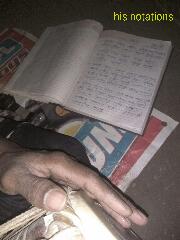
Raja (name changed) was practising, looking at the notations by his side. He could hardly read the notebook. He was sitting in dark at the farthest corner by the side of the eastern express highway in Thane.

For over five minutes Raja didn't even realise that I was standing by his side watching him play the Mridangam. My wife was watching patiently from a distance. She is used to such foolish halts of mine.

With a little bit of inquiry (finally when he looked at me), I came to know that he stayed in a rented shanty. His workplace was a few kilometers away. And that he sometimes came to practise in this corner whenever he got time. Once in a month he would go to his native near Murbad about 100 kilometres and take lessons from his Guru there.

What a commitment towards one's passion!

Whereas it is very easy to get spoilt (with smoking, drinking and chewing tobacco) in a metro city like Thane or Mumbai, the boy chose a corner and Mridang. The young boy (at 20 age) was pursuing his passion by the noisy and polluted roadside after work hours.

The reason: 

His neighbors would complain to his landlord about the 'noise' of Mridang. 

No room inside his room that he shared with a couple of partners.

Many 'innovate' hurdles to complain of 'why and how a thing couldn't be done' even after the corresponding resources were available in abundance. The young boy instead found solutions over his hurdles while nurturing his passion, staying alone 100 kilometres away from his family.

What an empowerment and self-enablement!

Sure to grow into a real life RAJA (King) of his passion if he continues to nurture it with consistency (rather than Passion as a Fashion) and self-managed supervision like Ekalavya.

Actually while I was writing this blogpost, my wife showed me a WhatsApp ping. It wrote "Joshua Bell, playing incognito in the D.C. Metro Station, that was organized by the Washington Post as part of a social experiment about perception, taste and people's priorities.

This experiment raised several questions:

In a common-place environment, at an inappropriate hour, do we perceive beauty?

If so, do we stop to appreciate it? " particularly when it comes free!

May be the boy is still to go far as a percussionist.

But what I wanted to appreciate was that that's how big names get made. In fact most successful people in various fields have left similar trails in their individual lives. They had little more patience to turn tables over while their problems were hell bent on testing them.

Their passions won over their problems by miles!

Big names get made when people find opportunities in problems without complaining about lack of resources, if any.

Big names get made (with holistic satisfaction as the result) when people find and nurture their passions rather than running after the run-of-the-mill careers.

Who knows (like Joshua Bell) sometime in life the boy may become a great percussionist if not Padma Shri Zakir Hussain!

In his humble mind, perhaps he already is!!

Here's my Haiku poem over the learning of the day:

Passion isn't a Fashion
Success isn't a cushion
Life is being in Motion


Also read a few relevant blog-posts hereunder: Please do consider leaving a comment or consider sharing this post.

Do you know a Best-Career-Plan
Take your career in fast lane!
Talent-Is-Latent: Enable It
Is Your Job Boring!
Overworked? Tension? CPU of the mind hung-up
Do you exercise your choice meaningfully 
IQ-EQ-or-SQ: What-is-more-important
Eternally Happy
In-a-problem? No-problem! Dwell-a-while
I am afraid ! What do I do !! 
Fearful-Of-Death-of-Birth
Take Habits For A Ride 
Big-Be Or Bug-Be ! 
Are You Good If Others Are Bad?  
Want Need-Or-Want 
How To Make A Difference 
Success-or-failure! What-do-you-like?
Succession-Plans In Fast Lane! 
Do you exercise your choice meaningfully
Do You Ask Right Questions
Carrier for the Career 

Tuesday, 3 January 2017

Carrier for the Career

Will I succeed in the career I choose and chase thereafter?

This is usually a question that lingers on the mind of most prospects.

In a couple of blogposts¹ earlier, I offered some guidance. In this one I would like to value add by offering some visual explanation.

There always exists some demand D, correspondingly some careers C and some passions P. In some cases, they overlap as in sketch-1 and in other cases they exist mutually exclusively as in sketch-2. 

Some people nurture their passions after office hours or at weekends. Those who do not know their passions may like to keep a journal of the activities that they enjoyed during working hours as well as after working hours and during weekends. Those could be the pointers to their passions!


Various types of demands could be due to the basic human needs (like food, shelter, clothing, security and education as in Maslow's hierarchical model) or due to wants (or so called glorified higher needs) as well.

CD arrow indicates that you may fall (burn) out of the current career irrespective of the demand being in place. This is true particularly if the both do not overlap the circle of passion.

PC arrow indicates that demand can get created if passion is in place and corresponding careers are available.

PD arrow indicates that career can be easily made if passion and demand both are in place.

If all of the P, C, D, co-exist then what's the problem?
Why does the doubt of 'success and failure' and that of 'choose and chase' exist?

One reason could be that the three might be floating around in isolation in their own P, C and D zones independently (mutually exclusively in the mathematical lingua), something like as you see in the sketch-2.

If however all the three overlap as in sketch-1 then the shaded zone (the green dot area common to P, C and D) is the most easier one for the prospects to succeed. That's because demand and careers are already available as a carrier for their passion to ride upon. In fact there'll be a pull from it for one's passion even if one may not want it.

Career chosen in this zone is where you are likely to make a major difference and leave your impact.

C and D (the orange and red dot areas) are where you need to push yourself very hard to create the carriers for a career to join the demand. You also need to work exceptionally hard to create skills and capabilities in line with the market demand. The reason is you need to work away from what you already have. The degree of push may vary a little depending upon the saturation level of the careers and the satisfaction levels of the demands as well.

Instead working on what you already have (your passion, the blue dot area) in order to enhance skills and capabilities in line with the opportunities that the market provides, creating the corresponding demand and career is much easier even if they hardly exist. You may have to do a little spadework though.

You may need to push very little to create a carrier for your career. You'll succeed anyway it being your passion. The criteria of success will more be enjoyment derived out of the process or journey rather than merely the earnings out of it. You are surely going to enjoy it because it's your passion that you are furthering it.

Those who understand this P-C-D interrelationship, don't have to worry about the Carrier for their Career. This is particularly true for the passionate ones because they are already 'play'ing the game of it rather than 'work'ing it out.

They already have answer to the question of 'choice and the chase'!
They are likely to be the most successful ones!!

Also read a few relevant¹ blog-posts² hereunderPlease do consider leaving a comment or consider sharing this post.

Footnote
Do you know a Best-Career-Plan
Take your career in fast lane!
Talent-Is-Latent: Enable It
Is Your Job Boring!

Footnote-² ... Other relevant blogposts
Overworked? Tension? CPU of the mind hung-up
Do you exercise your choice meaningfully 
IQ-EQ-or-SQ: What-is-more-important
Eternally Happy
In-a-problem? No-problem! Dwell-a-while
I am afraid ! What do I do !! 
Fearful-Of-Death-of-Birth
Take Habits For A Ride 
Big-Be Or Bug-Be ! 
Are You Good If Others Are Bad?  
Want Need-Or-Want 
How To Make A Difference 
Success-or-failure! What-do-you-like?
Succession-Plans In Fast Lane! 
Do you exercise your choice meaningfully

Do You Ask Right Questions
Overworked? Tension? CPU of the mind hung-up?


Wednesday, 30 July 2014

Is Your Job Boring

Job gets boring if a job is a 'job'.
Job gets boring when a job gets chosen primarily for the money it pays.

When job gets boring, the output 'bores' customer. And then the employer gets axing on you. 

Very often, people don't love their job if chosen jobs are not their passions.
Mentally as well as physically they get tired faster than they think if they don't love their job... Usually so before even they begin it.

End of a typical tiring day however, most don't mind playing a game of their choice tirelessly.
While playing people don't get tired easily. Usually so because play is a generic passion.
In fact they get happy because people love whatever they do passionately.

Double whammy! 
Not-paid play... not boring!!
Well-paid 'good' job.... but boring!!! 

What do do?

Don't lose heart yet.
Don't allow emotions to overrule you.

Do continue the job as usual during week days.

Ask probing questions in order to unearth your passion.
Finance it by the earnings from the job.
Nurture the passion on week-ends.

Look for skills common to both the job as well as the passion.
Try to compliment job to passion and passion to job.
Probability of the passion becoming passionate-job one day enhances.
'Job' might become a play and career thereafter.

Play gets played passionately.
Passionate play brings in happiness holistically.
When happy, the resultant output gets more productive and value-adding.

Afterall play is a play.
Everyone loves it without bothering about Hours.
And job is a job.
Everyone hates job; watching Minutes-after-Minutes for Hours together and Hours-after-Hours for Years together.

Read a few relevant blogposts hereunder:

IQ-EQ-or-SQ: What-is-more-important?
Do you know a Best-Career-Plan
Take your career in fast lane!
Succession-Plans In Fast Lane! 
In-a-problem? No-problem! Dwell-a-while!
Do you exercise your choice meaningfully
Do You Ask Right Questions
Overworked? Tension? CPU of the mind hung-up?
No Time? Micro-Meditate! 
Talk In Order To Listen! 
Eternally Happy!

Sunday, 9 March 2014

Strategise To Achieve Targets Daily

Lot of time and efforts get spent on strategy planning. 

Strategy sessions usually get organised away from workplace (Gemba). They often get glorified with team events, water sports, outdoor games around campfire, treasure hunts and so on. They give stylish titles to it. "Off-site", some say proudly after attending it.

Thinking that the 'so-motivated' lot might willingly accept appraisals, they try to manage by objectives (MBO). HRD managers (read 'people' managers) incorporate numbers into periodic (most often 'annual') performance appraisal systems. Some slogans complimentary to the initiative get hung on wall.

Only after failing miserably they realize that execution of strategy is much more than quarter-on-quarter (qoq) or year-on-year (yoy) appraisals or reviews. It goes beyond dusting the displayed-slogans periodically.

It's about eating-drinking-breathing the strategy announcements and talks in terms of actions. It's not merely about dreaming the distant vision. It's about living the dreams daily. 

Going beyond the "bird's-eye view" it's also about "worm's-eye view" at grass-root level (as Mohamaad Yunus creator of the Grameen Bank says about microfinance).

It's about management-OF-strategy, management-OF-objectives (MOO) or rather strategy deployment (Hoshin-Kanri) process. 

If MBO is equivalent to throwing (goal) balls over blind-walls among layers (hierarchies) and functions then MOO is equivalent to coaching to manufacture the balls (i. e. evolve goals) as also helping to catch them daily at tactical levels. 

MOO is like giving as much importance to single runs as much, say, a cricket match gives to a 'Six' on the first ball of the first over. It's about daily (Nichijo) management (Kanri) of strategy or of the policy (Hoshin-Kanri) with a sense of urgency. 

It's about recognizing heroes for their improvement efforts to overcome daily hurdles while playing for mini-goals as a subset of the strategic goals. It's about the culture of looking for as well as creating such heroes daily across the customer-supplier chain. 

Post such recognition, studying¹ of 'what went right' or 'what went wrong' as the case may be rather than mere review of the 'runs' taken for goal-making process itself is a daily affair. It's an on-going 'study' and enablement by corresponding on-going adjustments to the allocation of resources as per dynamic needs of business environment rather than doing it as 'qoq' or 'yoy' performance reviews. 

If formulating strategy is important then formulating strategy-to-execute it is more important characteristic of the MOO approach. 

Like winning a match; sales, other numbers, growth goals, etc. then get achieved as a bye-product resultant of leading and managing the above process intelligently!

¹ Called as hansei: a critical step in any process: the “check” phase of the famous “Plan-Do-Check-Act” cycle that Japanese business people use to govern any activity.

Also read a few relevant blog-posts hereunder

Suggestions On-Sale, None-To-Buy
Comprehensive-Strategic-Audits
Will It Work Here?
Can-changing-thoughts-change-nation?
In-big-problem-wear-hats-to-solve-it
Ridiculous Poison-culture versus Maverick Kaizen-culture
WOW Work-Culture: By Telling or Selling
IQ-EQ-or-SQ: What-is-more-important
Talent-Is-Latent: Enable It!
Judge If It's Paralysis-By-Analysis
Will It Work Here?
Suggestions On-Sale, None-To-Buy
Does recognition really matter
Who Comes First: Consumer Or Customer ?
Treat Root-causes, Not Symptoms !
ABCD of India Shining
Do You Ask Right Questions?
Am I 'Short-sighted' or 'Long-sighted'?

Tuesday, 15 October 2013

Aesthetics Spills-Over Function, Want Spills-Over Need (Part-2)

While I was forced to challenge aesthetic-design of the cup in Part-1 of this blogpost, incidentally I was heading to conduct a workshop on Value: Value-Engineering and Value-Analysis.

Value-Engineering And Value-Analysis

On one hand, increased cost to deliver same-or-reduced benefits-or-function in an offering implies that the value is reduced. On the other hand, offering the same-or-enhanced benefit/s-or-function/s at a reduced total cost to customer or end consumer means value is increased.

Making improvements with realisation of this re-actively (i.e. after the design is already in commercial use creating trouble for customer) though is about the concept of value-analysis. Realizing this proactively (i.e. making all-round improvements while testing the design itself keeping customer in the loop adequately) is about value-engineering.

Modifying the design of the cup after a customer faces difficulties (as in Part-1 of this blogpost) is about value-analysis. Launching an offering with well-tested trouble-free design by listening to unspoken voice-of-customer and the impact of the design on ecology is about the concept of value-engineering.

Both lead to enhanced value but the later generates more value by preempting the costs that otherwise tangibly incur in case of the former. The round shaped cup for instance preempts the COPQ (Cost-Of-Poor-Quality) incurred by the square-cup design (as in Part-1 of this blogpost).

Look at the shape of the ice-cream glass in the picture. It's an example of value-engineered judicious balance of the aesthetics-with-function. The value created in terms of the aesthetic shape of the glass without interfering with its function is designed-in into the offering.

Need Spills-Over Want

Function is a need: the primary requirement a customer expects an offering to serve.

Aesthetics is a want that is desire-based and is actually secondary requirement or in some situations even tertiary one as in case of coloring hair in VIBGYOR shades or colouring food-grains. I've seen color-coated groudnuts especially in some parts of Gujarat!

A judicious balance of 'needs' and 'wants' is the need-of-the-hour. Rather eco-friendly design of the offerings revolving purely around basic-or-primary 'needs' is actually the 'Survival-Need' of the warming-planet itself.

Most costs to the customer, society, and the planet get designed-in due to inadequate designs of products, services, processes, policies, etc.

So designers and leaders should value the value-engineering more. They should promote corresponding Kaizen improvements so that need for value-analysis at the cost of the COPQ incurred by the customer gets reduced if not eliminated.

In fact they should steer their organisations towards finding and marketing the 'needs' rather than 'pushing' consumerist attitude and habits towards desire-based 'wants'. Such leaders are the real friends of the planet. Those who nurture excessive wants are in a way a burden on the planet.

Greedy-wants push-up unnecessary human activities (non-value-activities). Unnecessary human activities be those at personal level or at corporate business level lead to over-consumption of resources. Over-consumption of resources is like raping the planet if I may say so!

An Exercise

Look at the picture for self-study at a little higher level of difficulty though.

It has five different designs (1, 2, 3, 4, 5) of a nose-mask. Different designs are expected to serve different functions in different situations. You may like to attempt answering following questions:

1/ Which product-design is designed to serve what function in what situation?
2/ Which product-design can serve what function in what situation as an alternative? Justify the "how?"!
3/ In that case, which product-design offers maximum Value? Justify the "how?" with its likely COPQ?
4/ Which product-design is a case of Value-Engineering and which one is of Value-Analysis? Justify the "how?"!
5/ What kind of greed-based 'wants' make the corresponding product a necessity?
6/ What are the 'needs' in the above context? And with what alternatives can we move towards satisfying the 'needs'?

What are the lessons¹?

1/ Let's change our mindsets to value 'needs' more than 'wants' while designing products, services, processes, and policies.

2/ Let's go beyond the myopic vision of running businesses for the sake of 'profit only' as its moto! Visualize the 'profit-for-planet' by viewing life-cycles of products, services, processes, and policies as subsets of the evolving need-cycles.

3/ Unnecessary aesthetic sheen while doing so is a want that does increase unnecessary cost. Enhanced cost does force a compromise on functional quality.

4/ Desire for Wants spills-over Needs and in turn spills-over the planet.


Aesthetics Spills-Over Function, Want Spills-Over Need !

Unwanted Aesthetic-Sheen
With a desire to be seen
Maketh a Person Mean 

Hi-Cost-Lo-Function: The affair routine 
Defies the very purpose of Lean
That of making the planet Green


Footnote-1: Reader may add tips and suggestions from own experience.
Footnote-2: The recommendation under Five-S's practice in Kaizen.


Also read a few relevant blogposts hereunder:

Aesthetics Spills-Over Function, Want Spills-Over Need (Part-1)
Aesthetics Spills-Over Function, Want Spills-Over Need (Part-2)
Do you exercise your choice meaningfully
What You See Isn't What's Made
You seem Reasonable if you appear Un-reasonable
Wish To Be Planet-Friendly?: Save! 
Suggestions On-Sale, None-To-Buy
WOW Work-Culture: By Telling or Selling
Eternally Happy: परमानंद

Monday, 17 June 2013

Do you exercise your choice meaningfully

'Exercise your choice' they say. Remembering it, sometimes I 'choose' to read emails in part to suit my convenience.
Actually there are infinite 'choices in life' if you 'exercise your choice' to think so. Some 'exercise choice meaningfully'. Some do so 'meanly'.

In my understanding, a choice is 'meaningful' if intention ... (CLICK HERE to read more & to read complete TEXT)

Here in the picture is a poem that evolved for Swara-Sampada music group as a result of exercising choice.

Also read a few relevant blogposts hereunder: Please do consider leaving a comment or sharing this post.