The PJ (poor joke) above might no longer remain a PJ if banana peel is replaced by a typical problematic situation one encounters in daily routine. The question remains unanswered then: Why do some people find it difficult to act beyond cure? They do think 'Prevention is The Best Cure' though! I was no different from them! But now my journey is gathering speed, hopefully in the direction that the blog is supposed to drive towards. Checkout my other blogs and work at http://www.worldOFkaizen.com/
Showing posts with label Leader. Show all posts

Friday, 2 January 2026

"How did I get the Desired Performance!"

"Mid-year 2020, I was doubtful of achieving planned turnover for the whole year particularly since most part of the year was already lost due to the pandemic situation. I wonder, how we got the  Performance though as desired!" exclaimed the CEO on April-1st, the first day the of the next financial year!

Not an April-Fool, but it was a genuine effort of the CEO to understand the "how-&-what" of the things gone right! That - 'to be a learner' - is surely the sign of a 'good' leader wanting to be a 'great' one!

In past I often found an answer to this question in the judicious mix of the application of reinforcement techniques (as the environmental nudges to perform), intrinsic motivation of a person and her capability to perform. So was my reply to the CEO!

Ability + Motivation + Environmental nudges = Performance! I tossed the equation at him.

(Extract from the book: Ego + Ego ... We Go! Behavior Modulation Techniques To Improve Kaizen Leadership, Performance & Negotiation Skills by Shyam Talawadekar)

"You get what you review" as someone has said (or rather ask for it assertively). I've had firsthand experience of this statement (during my leadership career if at all) that one must incorporate right "nudges" in a right manner as an integral part of the Performance-equation as above, I told the CEO. 

Consistency in you conducting weekly reviews as the nudges (subtle ones more frequently) - that consisted of clarity on the weekly goals in tune with the annual ones, enabling teams to work within the "forced"  constraints on resources towards ensuring sustainable growth (as a commitment to planet before profit), to comply with the corresponding standards, driving improvements on the root causes of the shortfalls, if any - followed by instantaneous non-monitory-recognitions as Positive Reinforcements, to those intrinsically motivated employees demonstrating values-based performance, played a major role in getting the desired &/or the raised level of sustainable performance. 

It may not be out of place here to remember that there is a Difference between Ability, Capacity, Capability and the Competence that differentiate between achieving a desired level of performance rather than merely the performance itself.

By the side of the Positive Reinforcements, Negative Reinforcements where needed, such as say the fear of losing compensation proportionate to the lower level of performance, if any, play their own role.

Of course, fear of rationalised punishment, like the one that some non performing managers got in the said company, play its role too.

The positive effect of the former - the Positive Reinforcements - however, gets more than nullified by upsetting the capable as also the intrinsically motivated employees, if the latter, the Negative Reinforcement & especially the punishment to the non performers, is not put in place adequately! However, such a punishment in particular, should not be awarded unless every other effort - Saamaa-Daamaa-Dandaa-Bhedaa - had already failed.

So, effective execution of environmental nudges is as important as building capable people while riding on their intrinsic motivation in order to get the desired level of performance! 

And to get the the desired performance through right means & measures without harming the planet! "We can count, but we are rapidly forgetting how to say what is worth counting and why" as the German-American computer scientist JOSEPH WEIZENBAUM says.

It's good to reflect and build upon the causes of what went right (or what went wrong) in the above process of performance development-cum-management in its intermittent stages rather than complacently rejoicing a good performance (or playing a blame-game regretting a bad performance) at the end of the pipeline. 

Such a 'process of reflection' is called as the Hansen-Kai way to learn wisdom! in Kaizen practising companies that make a difference!

Isn't this the job of a Great leader and that of her Good leadership team!


Also read a few relevant blogposts hereunder:

Do You Force Customers To Quit
In-a-problem ? No-problem! Dwell-a-while!
Customer or Custo-Mer ?  
Experienced A Delightful Payment ! 
An Experience of Heart-and-Soul 
Do you keep curing your brand ?  
customer gets what s/he deserves: Shoddy Quality!  
Listen to iceberg of VOC to acquire customers 
Less With More And More Gets Sore 
Should one care for value ?  
Can-changing-thoughts-change-a-nation
Ridiculous Poison-culture versus Maverick Kaizen-culture 
Tolerate Once, Twice, Thrice?  
The Business Of Businesses 
That's how some business partnerships work 
Taken-For-Granted ? You Deserve It !! 
Strategise To Achieve Targets Daily 
Does recognition really matter 
That's How Morons Work
Simplicity Of Theory Of Relativity
Difference between raam-&-krishna tactics


Thursday, 1 January 2026

How To Make A Difference

"Which step have you reached today?" The picture with this question makes round on-and-often on social media as also at workplaces (gembas¹).

I don't know its source but would like to give credit to this picture that in a way, among other things, triggered this blogpost.

One can reach the 'top-step' within a moment if one knows "How to make a difference!"

One can make a difference to a given situation by training her brain to be positive. Brain can stay positive by keeping it engaged through positive behaviors.

Here is a 3-point agenda that I try to use in order to engage "myself" in positive actions and stay on the top-step.
1/ Attempt 1-small improvement a day.
2/ Appreciate improvements demonstrated by others.
3/ Say "Thanks" , "Sorry" , "Please" at every opportunity. Good if it's complimented by an action-oriented message fitting the situation rather than merely being goodie-goodie. Good leaders do so: clap as well as "slap" if necessary and appropriate.

Attempt 1-small improvement a day

This helps one to take responsibility to make a difference to status-quo of a given situation. It helps brain to challenge a problematic situation while staying positive on corresponding action.

My S.O.S. commitment to myself is to save-on-something (S.O.S.) each day be it something in the material¹ world or say water¹ or some activity such as say a few wasteful walk-steps.

This may sound like an idiosyncratic fellow, that I am. But it's difficult to dispute the fact that global-warming has crossed threshold levels of warning especially because of greed-based human activity. And of course, driven by the way we measure performance (by want-based results than the need-based input\s - process\es) at both the business as well as at individual level.

If you keenly observe you may find that a lot of human activity is unnecessary & wasteful. If one finds ways and means to combinemerge or eliminate a few activities it can definitely save some material, some human energy as well as ease some difficulties for self and others.

The other day I told a friend of mine that I'm ok with SMS invitation of his son's wedding instead of a hard copy. I even offered him my telephonic time to convince a few common friends so that he could print those many cards less. Helps "Save¹ a Tree" mission! Although it's good if 'such offer' comes from receiver's end, more often than not it gets ridiculed, sometimes as being a miser.

In another instance, a new acquaintance did appreciate my act though, when I humbly returned his business-card after scanning it immediately on Android phone. Hopefully I communicated the message S.O.S. !!!

This brings us to second point of the 3-point agenda.

Appreciate improvement efforts demonstrated by others

This one forces one to catch someone making efforts to do something good and the desired. Remember, "making efforts" or s\he "taking efforts". 

It helps one to "observe" others. It helps to appreciate the 'process' they are involved in rather than waiting for the 'results' of their action that isn't in their control. It forces one to reflect and thereby begin observing "self". It's like subtly learning from others: a source of input for the first point above. 

It also improves your active listening ability.

No need even to say 'Good' while appreciating. Just a 'Smile' as a token of expressing appreciation is OK. It's the fastest and implicit way to recognise others. It's likely to be valued by the receiver because it's done just-in-time (JIT) for the occasion.

I did it the other day when I saw a small boy putting off fan while alighting from lift. In less than a few seconds in the lift, not only I could reinforce his desired behavior but also could earn a friend. Unknowingly I am sure 'thought' process of both of us got triggered in a subtle manner. 

It's like respecting a person by taking cognizance of her efforts. 

Say Thanks, Sorry, Please everyday

This one helps one to express gratitude in an explicit manner. If done particularly when others are at a "receiving end", action-oriented messages fit for the situation also get accepted.

Other day morning my ATM card got stuck. Luckily currency notes came out promptly. Security guard on duty tried his best by fiddling with the keyboard. He seemed to be in a typing-speed contest. After a couple of minutes he acrobatically "slapped" the machine at a couple of spots but in vain. Looking anxiously through the glass as few more morning-walkers joined the queue, he offered to summon another guard on duty on rear-side door of the bank that was yet to open.

By the time both walked in to the scene (the Gemba²) a transaction-slip rolled out of ATM at snail's pace. "It came out  automatically without asking for one", I exclaimed.

"Subahmein machine ko garam honeko time laagta hai (Machine takes time to warm-up in the mornings sometimes.)", one of them said with scenic expressions.

Card however was still stuck inside. Their 'warm-up theory' refused to work this time. Sensing the 'warming temperature' out in the queue, they again "slapped" the machine. By then a bank officer walked in and 'slapped' them with seemingly abusive body language. This time again the machine made fun of all of them. It gently rolled out the card itself without even anyone touching the machine. Fearingly I grabbed the card before it could get "sucked in" again.

Looking at their embarrassed (pinkish-red) faces I said, 'thank-you' and 'sorry-for-the-trouble'. "Now 'please' do some Hansen-kai learning about this frequent 'warming-up theory'. You need to put some operation and maintenance practices in place to remove such abnormalities so that a lot of energy can be saved for yourself as well as for so many people in the morning rush hours.

Although upset, I tried to make a difference by staying cool. That's what was in my control. Of course registered a complaint! 

Doing what's in ones control rather than staying indifferent itself leads to the first-point i. e. making an improvement!! 

All 3-point actions are possible anytime, anywhere, autonomously without any budget, without anyone's permission or approval!!!

Footnotes
1: Go paperless.. is the punchline in my mails that I practice each day. An inefficient paper-mill uses 300-400 ton-water per ton-paper !.. 83,000,000++ton paper is wasted each year !!.. A-Paper-Saved => Lot-of-Water-&-A-Tree-Saved !!
2: Gemba means the workplace where action takes place. One can find a lot many improvement opportunities if the gembutsus (the ATM machine that makes abnormal noise, the card that rolls in, the paper that gets stuck, etc) there are powerfully observed for the way they function. 

Also read a few relevant blogposts hereunder: Please do consider leaving a comment or sharing this post.

Thursday, 12 July 2018

India won! But Indians lost!

Time to celebrate for Indian cricket team!

The team had completed a mission!!

India had won the 20:20 international series 2-1 against England!!!

The team had completed their tasks over-over-the-over, over-on-over I mean!

Forgetting their own assigned duties and tasks over-on-over, the restaurant staff however in a star hotel seemed to have got distracted by the over-on-over excellent performance of the Indian cricket team.

Most of them gathered around the TV watching the prize ceremony instead of being around customers, except a trainee female staff alone catering to a couple of tables.

Indifference of the manager and staff was strikingly noticeable especially when it was an a-la-carte day instead of a buffet dinner.
Couldn't they've been a little proactive each by a smiling eye-contact with customers! Hardly a  couple of tables were occupied though!

Looking at the TV screen following in the footsteps of her leader seniors, even the trainee staff was found to be filling water in the glass or picking up yet-to-be-finished plate without the consent of the customer! A Waste!!

Can you imagine the Cost-Of-Poor-Quality (COPQ) or rather the Cost-Of-Poor-Service (COPS) of such behaviour in the industry such as Hospitality where the behaviour itself is more important along with the hard quality of course!

Staff busy watching match
Customer fetching her own batch
No one around to catch

That's my Haiku poem dedicated to such Lose-Win behaviour where Indians lost while India won!

Also read a few relevant blogposts hereunder:

Do You Force Customers To Quit
In-a-problem ? No-problem! Dwell-a-while!
Customer or Custo-Mer ?  
Experienced A Delightful Payment ! 
An Experience of Heart-and-Soul 
Do you keep curing your brand ?  
customer gets what s/he deserves: Shoddy Quality!  
Listen to iceberg of VOC to acquire customers 
Less With More And More Gets Sore 
Should one care for value ?  
Can-changing-thoughts-change-a-nation
Ridiculous Poison-culture versus Maverick Kaizen-culture 
Tolerate Once, Twice, Thrice?  
The Business Of Businesses 
That's how some business partnerships work 
Taken-For-Granted ? You Deserve It !! 
Strategise To Achieve Targets Daily 
Does recognition really matter 
That's How Morons Work
Simplicity Of Theory Of Relativity

Tuesday, 17 January 2017

Passion or Fashion?

7 P.M. Cool and pleasant evening. I was on an evening walk.

I was almost pulled by the rhythmic beats of Mridangam (a type of percussion instrument) from behind the hedge.

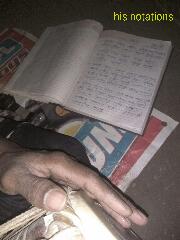
Raja (name changed) was practising, looking at the notations by his side. He could hardly read the notebook. He was sitting in dark at the farthest corner by the side of the eastern express highway in Thane.

For over five minutes Raja didn't even realise that I was standing by his side watching him play the Mridangam. My wife was watching patiently from a distance. She is used to such foolish halts of mine.

With a little bit of inquiry (finally when he looked at me), I came to know that he stayed in a rented shanty. His workplace was a few kilometers away. And that he sometimes came to practise in this corner whenever he got time. Once in a month he would go to his native near Murbad about 100 kilometres and take lessons from his Guru there.

What a commitment towards one's passion!

Whereas it is very easy to get spoilt (with smoking, drinking and chewing tobacco) in a metro city like Thane or Mumbai, the boy chose a corner and Mridang. The young boy (at 20 age) was pursuing his passion by the noisy and polluted roadside after work hours.

The reason: 

His neighbors would complain to his landlord about the 'noise' of Mridang. 

No room inside his room that he shared with a couple of partners.

Many 'innovate' hurdles to complain of 'why and how a thing couldn't be done' even after the corresponding resources were available in abundance. The young boy instead found solutions over his hurdles while nurturing his passion, staying alone 100 kilometres away from his family.

What an empowerment and self-enablement!

Sure to grow into a real life RAJA (King) of his passion if he continues to nurture it with consistency (rather than Passion as a Fashion) and self-managed supervision like Ekalavya.

Actually while I was writing this blogpost, my wife showed me a WhatsApp ping. It wrote "Joshua Bell, playing incognito in the D.C. Metro Station, that was organized by the Washington Post as part of a social experiment about perception, taste and people's priorities.

This experiment raised several questions:

In a common-place environment, at an inappropriate hour, do we perceive beauty?

If so, do we stop to appreciate it? " particularly when it comes free!

May be the boy is still to go far as a percussionist.

But what I wanted to appreciate was that that's how big names get made. In fact most successful people in various fields have left similar trails in their individual lives. They had little more patience to turn tables over while their problems were hell bent on testing them.

Their passions won over their problems by miles!

Big names get made when people find opportunities in problems without complaining about lack of resources, if any.

Big names get made (with holistic satisfaction as the result) when people find and nurture their passions rather than running after the run-of-the-mill careers.

Who knows (like Joshua Bell) sometime in life the boy may become a great percussionist if not Padma Shri Zakir Hussain!

In his humble mind, perhaps he already is!!

Here's my Haiku poem over the learning of the day:

Passion isn't a Fashion
Success isn't a cushion
Life is being in Motion


Also read a few relevant blog-posts hereunder: Please do consider leaving a comment or consider sharing this post.

Do you know a Best-Career-Plan
Take your career in fast lane!
Talent-Is-Latent: Enable It
Is Your Job Boring!
Overworked? Tension? CPU of the mind hung-up
Do you exercise your choice meaningfully 
IQ-EQ-or-SQ: What-is-more-important
Eternally Happy
In-a-problem? No-problem! Dwell-a-while
I am afraid ! What do I do !! 
Fearful-Of-Death-of-Birth
Take Habits For A Ride 
Big-Be Or Bug-Be ! 
Are You Good If Others Are Bad?  
Want Need-Or-Want 
How To Make A Difference 
Success-or-failure! What-do-you-like?
Succession-Plans In Fast Lane! 
Do you exercise your choice meaningfully
Do You Ask Right Questions
Carrier for the Career 

Tuesday, 3 January 2017

Carrier for the Career

Will I succeed in the career I choose and chase thereafter?

This is usually a question that lingers on the mind of most prospects.

In a couple of blogposts¹ earlier, I offered some guidance. In this one I would like to value add by offering some visual explanation.

There always exists some demand D, correspondingly some careers C and some passions P. In some cases, they overlap as in sketch-1 and in other cases they exist mutually exclusively as in sketch-2. 

Some people nurture their passions after office hours or at weekends. Those who do not know their passions may like to keep a journal of the activities that they enjoyed during working hours as well as after working hours and during weekends. Those could be the pointers to their passions!


Various types of demands could be due to the basic human needs (like food, shelter, clothing, security and education as in Maslow's hierarchical model) or due to wants (or so called glorified higher needs) as well.

CD arrow indicates that you may fall (burn) out of the current career irrespective of the demand being in place. This is true particularly if the both do not overlap the circle of passion.

PC arrow indicates that demand can get created if passion is in place and corresponding careers are available.

PD arrow indicates that career can be easily made if passion and demand both are in place.

If all of the P, C, D, co-exist then what's the problem?
Why does the doubt of 'success and failure' and that of 'choose and chase' exist?

One reason could be that the three might be floating around in isolation in their own P, C and D zones independently (mutually exclusively in the mathematical lingua), something like as you see in the sketch-2.

If however all the three overlap as in sketch-1 then the shaded zone (the green dot area common to P, C and D) is the most easier one for the prospects to succeed. That's because demand and careers are already available as a carrier for their passion to ride upon. In fact there'll be a pull from it for one's passion even if one may not want it.

Career chosen in this zone is where you are likely to make a major difference and leave your impact.

C and D (the orange and red dot areas) are where you need to push yourself very hard to create the carriers for a career to join the demand. You also need to work exceptionally hard to create skills and capabilities in line with the market demand. The reason is you need to work away from what you already have. The degree of push may vary a little depending upon the saturation level of the careers and the satisfaction levels of the demands as well.

Instead working on what you already have (your passion, the blue dot area) in order to enhance skills and capabilities in line with the opportunities that the market provides, creating the corresponding demand and career is much easier even if they hardly exist. You may have to do a little spadework though.

You may need to push very little to create a carrier for your career. You'll succeed anyway it being your passion. The criteria of success will more be enjoyment derived out of the process or journey rather than merely the earnings out of it. You are surely going to enjoy it because it's your passion that you are furthering it.

Those who understand this P-C-D interrelationship, don't have to worry about the Carrier for their Career. This is particularly true for the passionate ones because they are already 'play'ing the game of it rather than 'work'ing it out.

They already have answer to the question of 'choice and the chase'!
They are likely to be the most successful ones!!

Also read a few relevant¹ blog-posts² hereunderPlease do consider leaving a comment or consider sharing this post.

Footnote
Do you know a Best-Career-Plan
Take your career in fast lane!
Talent-Is-Latent: Enable It
Is Your Job Boring!

Footnote-² ... Other relevant blogposts
Overworked? Tension? CPU of the mind hung-up
Do you exercise your choice meaningfully 
IQ-EQ-or-SQ: What-is-more-important
Eternally Happy
In-a-problem? No-problem! Dwell-a-while
I am afraid ! What do I do !! 
Fearful-Of-Death-of-Birth
Take Habits For A Ride 
Big-Be Or Bug-Be ! 
Are You Good If Others Are Bad?  
Want Need-Or-Want 
How To Make A Difference 
Success-or-failure! What-do-you-like?
Succession-Plans In Fast Lane! 
Do you exercise your choice meaningfully

Do You Ask Right Questions
Overworked? Tension? CPU of the mind hung-up?


Saturday, 29 November 2014

Macro-Micro Syndrome

"You are too much into detailing."

Many might have heard this, mostly from bosses. Sometimes same bosses are heard saying, "you lack meticulous execution."

They tend to use former one if and when their macro vision is reasonably in control. They use the latter if macro vision goes out of gear. That's exactly isn't desirable: Choosing one over the other as a matter of convenience.

Generally for any success to be sustainable, both the macro and the micro are supposed to be complementary to each other. It's difficult for one to stand the test of time without support of the other.

It's difficult to reach a desired destination within a desired time with optimum efforts in absence of having a plan and a design in the first place. Nor is it easy to reach there without taking each step meticulously.

"When batting, I was only focused on the next ball — not on the scorecard", said cricketer Rohit Sharma on notching up the highest-ever individual score in one-day international cricket hitting a breathtaking 264 runs against Sri Lanka in Kolkata’s Eden Gardens.

The late JRD Tata had made commitment to make improvements even on cups and saucers used on his own airlines while on flight number 109 in 1955. 

Does it mean JRD and Rohit were too much into detailing: the micros? 
Does it mean they weren't focused on macros: their goal, target or performance level? 
They very much were!

In fact every successful person always has clarity on her vision and goal before setting out to execute it. It's just that thereafter they meticulously plan for resources and execute each step each day (Nichijo-Kanri as they say in Japanese Management parlance) inching towards their goal rather than bothering about the goal itself at each and every step.

Without detailed checking of condition and level of oil and water, condition of stepney, etc. setting out in a vehicle to reach a destination is not only foolish but is risky as well. Former is about setting the process right to get the result. The latter is about expecting result without putting in adequate efforts.

Former, the micro detailing, is about calculating and safeguarding against the probable risk factors in order to reduce their impact and the risk of failure, if any, while enabling to achieve the macro goals.

Hope meticulous execution doesn't conveniently get ridiculed for it's so-called 'detailing' nor does a typical macro visioning strategy get ridiculed for it's powerful imagination as "Daydreaming".

Also read a few relevant blog-posts hereunderPlease do consider leaving a comment or sharing this post.

Old-Problems, New-Reasons !
Ant Knocks Elephant Down 
Will It Work Here?
Can-changing-thoughts-change-nation?
In-big-problem-wear-hats-to-solve-it 
Ridiculous Poison-culture versus Maverick Kaizen-culture 
WOW Work-Culture: By Telling or Selling 
IQ-EQ-or-SQ: What-is-more-important 
Talent-Is-Latent: Enable It! 
Judge If It's Paralysis-By-Analysis 
Will It Work Here
Suggestions On-Sale, None-To-Buy 
Does recognition really matter 
Who Comes First: Consumer Or Customer ? 
Treat Root-causes, Not Symptoms ! 
ABCD of India Shining 
Do You Ask Right Questions?
Am I 'Short-sighted' or 'Long-sighted'
Who Comes First: Consumer Or Customer ? 

Wednesday, 20 August 2014

Talent-Is-Latent: Enable It!

Business of the company that I went to assess was driven by research and development (R&D), high obsolescence of products and uniquely varying needs of customers.

High customisation was the order of the day. That in turn called for high level of customer contact and listening skills in order to capture voice of customer (VOC) precisely. This obviously calls for leadership skills to get it made in-house and get delivered before competition could do.

The need may appear unique to the company. But this in fact is the order of the day for most suppliers given the ever dynamic market place characterised by VUCA¹ and high level of competition.

While CEO of the company was keen to improve business processes to help retain their position externally, simultaneous concern was about 'attrition' he had been facing. Recently 'bought' talent also left, he complained.

Won't the training go waste under such circumstances, he feared.

Between the trained people leaving and untrained ones living (with you) for ever with their errors to annoy you, what is better?

Education, training and coaching builds people. Between 'Building' relevant skills captively versus installing 'Bought' skills as a foreign particle, what is preferable?

Companies need to understand that building pipelines of people is no less important alongside building the pipelines of products. In fact the former should be their prime agenda.

Why do people quit?
Especially those with high aspirations definitely do.

In fact, those without aspirations too move in absence of a conducive environment to hold them back. One of the major reasons of the other party leaving is indifferent treatment be it to people in general or to a customer in particular. 

So one of the most important portfolios of the CEO is not to leave HRD² to HR-D (HR-Department). Instead, creating culture that 'compels' people to stay back should be her hands-on agenda driven personally.

One can't ignore the fact that even seemingly dumb people have intelligence, so-called average though. It usually stays latent or dormant until challenged.

Leaving aside their own ego, superiors just need to facilitate unleashing it by making them feel confident and help them to realise their self-worth. They just need to be given an opportunity and a platform to shine. This can be done by encouraging them to express their thoughts, experiment corresponding changes in their work area without fear-of-failure.

It's a process of enabling³ people.

Once done, latent talent can be seen flowering and flowing-in smoothly. The pipeline of HRD can be seen getting 'built' that not only ensures employee retention but also creates a pull.

How to enable³ people?

First of all collect (Not Buy!) people who have fire-in-their-belly although with not-very-high aspirations and high-qualifications. Then enable³ them step-by-step. 

Step-1. Establish your credibility by demonstrating your actions on what you speak.

Step-2. Explain your expectations from them. Communicate your urgency and seriousness through complimentary evidences.

Step-3. Educate, train and coach them.

Education is to help them acquire goal specific knowledge.
Training is to help them acquire goal specific and industry-relevant, organisation-specific skills.
Coaching is to help them on 'Do-Why' and 'Do-How' in order to apply the knowledge and skills to enthusiastically achieve the goals of common good.

Step-4. Encourage, inspire & motivate to keep them engaged in the process. Give them a platform to showcase their talent and to shine.

Step-5. Empower them: Give them freedom-within-a-framework to experiment without fear of failures.

Step-6. Ennoble, means dignify them with high respect. Recognize & reward their achievements by actively listening to their efforts.

Step-7. Repeat the enablement cycle to take up higher challenges.

'Building' people rather than 'Buying' them is in a true sense creating a learning organisation as companies like Toyota do. It's their company level strategy driven by the top rather than merely a HRD² strategy left to the HR-D.

Footnotes:
1. VUCA: Volatile, Uncertain, Complex, Ambiguous. A term of military origin that represents warfare environment.
2. HRD: Human Resource Development.
3. Model 7-E© from Book "How To Enable A Change Process? Start-From-Self". Author: Shyam Talawadekar.

Also read a few relevant blogposts hereunder: Please do consider leaving a comment or sharing this post.

Taken-For-Granted ? You Deserve It !!
Strategise To Achieve Targets Daily
Does recognition really matter
IQ-EQ-or-SQ: What-is-more-important?
Do you know a Best-Career-Plan
Take your career in fast lane!
Succession-Plans In Fast Lane! 
Treat Root-causes, Not Symptoms !
Nauseous Communication Gaps
Do You Cleanup-After-Crisis
Raam or Krishna-Shyam: Tell me Hey Raam!
Will It Work Here
Some Moron ! Some Great !!!  
That's How Morons Work
You seem Reasonable if you appear Un-reasonable
Smart-Moron Who Breaks Your Glass 
WOW Work-Culture: By Telling or Selling
Suggestions On-Sale, None-To-Buy
Can-changing-thoughts-change-a-nation
Ridiculous Poison-culture versus Maverick Kaizen-culture
Tolerate Once, Twice, Thrice?
Make checklists your friends 
Make It Simpler, Rest Will Follow
How To Make A Difference
Big-Be Or Bug-Be !
A customer gets what s/he deserves: Shoddy Quality!
Listen to iceberg of VOC to acquire customers

Monday, 7 July 2014

Be Bug-Be Or Big-Be ?

Overcome The Tyranny Of Small Minds 

While reading the above spiritual article, it occurred to me that there could be four kinds of people in the corresponding context.

1/ Big people with small mind: Bugger-Be !
2/ Big people with big mind: Bigger-Be !
3/ Small people with small mind: Bug-Be !
4/ Small people with big mind: Big-Be !

First category of people (read the corresponding blogpost on the link) is the one that is powerful enough but doesn't bother about other's presence. Bugger-Be doesn't make contribution to other's rightful needs nor to the societal ones.

Last category of people (the so-called small people with big mindBig-Be !) is the one that is not powerful at all. But it empowers itself in order to bother about other's presence. It also makes diffrence to the small world around them by contributing to other's rightful needs. Through their value adding actions, it makes others think and act!

It's actually the Big-people (the first and the third category) that can make significant diffrence to others and to the socio-economic needs.

Wheel-of-Worldly activity, however, is somehow getting managed because of presence of the last category of ('small') people. The wheel might run faster (and in a better fashion) if the quadrant of the first category of people reduces and the size of second category of people (Bigger-Be With Big-Mind) increases.

Easiest way for the Bugger-Be to turn into a Bigger-Be in this context is to copy actions of the last category: That of the Big-Be !

Big-people do have power to influence bigger circles of people at a bigger scale!!


Also read a few relevant blogposts hereunder:

Raam or Krishna-Shyam: Tell me Hey Raam!
Some Moron ! Some Great !!!
WOW Work-Culture: By Telling or Selling
Suggestions On-Sale, None-To-Buy
Ridiculous Poison-culture versus Maverick Kaizen-culture
Taken-For-Granted ? You Deserve It !!
IQ-EQ-or-SQ: What-is-more-important?

Monday, 21 April 2014

Beware Of Political-Presentations

At the time of elections they do two things.

One, political leaders make new promises without timeline to their election manifesto. Their tenure is supposed to be presumed as timeline without any commitment from the politicians. Tenure for National and
State level is five years.

Two, they show their performance as 'achieved' without making any reference to measures of the last manifesto: Measures such as what was promised, how much, of what specifications, within what timeline.

It's but natural that fake statements make up for their speeches. They manage the 'show' by 'show'ing sundries such as facades of rail-station's entries, an escalator here, a footover bridge there, etc. They put their 'best foot forward'. No reference to whether that was a priority nor whether it was in the corresponding election manifesto.

Sometimes the projects 'show'n as complete happen to be the ones that were begun during a couple of tenures before the current election. The one that was supposed to have been completed in the first tenure itself, got delayed until the third or fourth tenure and hence became eligible to be 'show'n.

It's like a local train that was supposed to reach destination within a couple of hours but eventually reached after a couple of days. Smart voters do not turn blind eye to that.

However the current politician does take advantage of marketing it as his own achievement. Credit grabbing! Funny part is sometimes out of their enthusiasm they even end up showing pictures of a rail-line of a railway station as 'achievement'. That had anyway been existing their for ages.

Although this might appear to be a bit of an exaggeration that's the way Indian political presentations are; aesthetic than functional. Look at newspaper advertisements and publicity material during election-time if you don't believe this.

What a good presentation be like?

A good presentation should be a no-presentation at all. 

Real work doesn't need 'presentation'. The surroundings, the workplace (Gemba) itself and each real-element of the process (Gembutsu) 'speaks' the 'dynamism' of the change in realtime (Genjitsu).

If for instance a presentation is needed for commercial reasons, as a checklist it should contain business like dimensions such as before-after pictures of improvements and achievements till-date, period-to-date (PTD), year-to-date (YTD), month-to-date (MTD), week-to-date (WTD), etc. 

Not only it should contain recognition and review of planned versus actual 'results' but also a log of the 'roles performed' and efforts taken during the 'means to the results'. The achievements be compared with promises in terms of productivity and quality-of-life measures, timelines vis-a-vis promises made with corresponding priorities.

I think even a hundredth of candidates won't be able to contest elections if they do so. That's why they don't do so. Rather they make it a 'political-show'.

Story in some corporate houses is no different. Sometimes their 'presentations' are 'better' than politician's ones especially during appraisal times.

Beware: Take a close look at the 'other foot' as well since the 'best foot forward' can be deceptively attractive! A way to do it is believing your eyes than ears. Make deep diving at the real-site (Gemba) 'to see changes' as primary rather than 'hear' presentations away from Gemba. 

Create awareness to compare 'what-was-planned', 'what-it-was' with the improved 'what-it-is-now' and 'what-it-could-be' next. And then present it with their timelines and multi-dimensional (holistic) measures.

Bring out vividly 'what-changes' were driven at root-cause level in order to make the change sustainable.

It does motivate, recognise and reinforce desired behavior of the people who matter if one measures achievements with correct reference lines. 

Otherwise it's sure to promote fire-fighters while demotivating the fire-preventers: A culture of promoting fire-fighting rather than fire-prevention! 

Also read a few relevant blogposts hereunder:

Elections on anvil for voters' will

Aesthetics Spills-Over Function, Want Spills-Over Need (Part-1)

Aesthetics Spills-Over Function, Want Spills-Over Need (Part-2)

WOW Work-Culture: By Telling or Selling

Discrimination-is-Cremation of Law-&-Order (Part-1

Discrimination-is-Cremation of Law-&-Order (Part-2

Discrimination Cremated! But How Long? 

How To Make A Difference

Big-Be Or Bug-Be !

Can-changing-thoughts-change-a-nation

Ridiculous Poison-culture versus Maverick Kaizen-culture

That's how some business partnerships work

Taken-For-Granted ? You Deserve It !!

Treat Root-causes, Not Symptoms !

Talk In Order To Listen

What You See Isn't What's Made

ABCD of India Shining